Ben Turpin

Ben Turpin was a American cross-eyed comedian and actor, best remembered for his work in silent films.

Turpin was born Bernard Turpin in New Orleans, Louisiana on September 19, 1869, the son of a candy store owner.

He worked in vaudeville, burlesque, and circuses. Turpin had a distinctive appearance, with a small wiry frame, a brush mustache, and crossed eyes. Turpin’s famous eyes, he said, only crossed as a young adult after he suffered an accident. Turpin was convinced that the crossed eyes were essential to his comic career; his co-workers recalled that after he received any blow to the head he made a point of looking himself in the mirror to assure himself that they had not become uncrossed. Turpin was a devout Catholic, and his workmates would occasionally goad him by threatening to pray that Turpin’s eyes would uncross, thus depriving him of his livelihood.

Turpin famously bought a $25,000 insurance policy with Lloyd’s of London, payable if his eyes ever uncrossed. He developed a vigorous style of physical comedy, including an ability to stage comic pratfalls that impressed even his fellow workers in the rough-and-tumble world of silent comedy. One of his specialties was a backward tumble he called the “hundred an’ eight'” .

Beniamino Gigli

Beniamino Gigli, was an Italian opera singer. The most famous tenor of his generation, he was renowned internationally for the great beauty of his voice and the soundness of his vocal technique. Music critics sometimes took him to task, however, for what was perceived to be the over-emotionalism of his interpretations. Nevertheless, such was Gigli’s talent, he is considered to be one of the very finest tenors in the recorded history of music.

Gigli was born in Recanati, in the Marche, the son of a shoe-maker who loved opera. His brother Lorenzo became a famous Italian painter.

In 1914, he won first prize in an international singing competition in Parma. His operatic debut came on October 15, 1914 when he played Enzo in Amilcare Ponchielli’s La Gioconda in Rovigo, following which he was in great demand.

Gigli made many important debuts in quick succession, and always in Mefistofele: Teatro Massimo di Palermo, Teatro San Carlo di Napoli, Teatro Costanzi di Roma, La Scala, and finally the Metropolitan. Two other great Italian tenors present on the roster of Met singers during the 1920s also happened to be Gigli’s chief contemporary rivals for tenor supremacy in the Italian repertory?namely, Giovanni Martinelli and Giacomo Lauri-Volpi.

Bennett Cerf

Bennett Alfred Cerf was a publisher and co-founder of Random House. Cerf was also known for his own compilations of jokes and puns, for regular personal appearances lecturing across the United States, and for his television appearances in the panel game show What’s My Line?.

Bennett Cerf was born and brought up in New York City in a Jewish family of Alsatian and German descent. His father, Gustave Cerf, was a lithographer, and his mother, Frederika Wise, was an heiress to a tobacco-distribution fortune.

Cerf attended Townsend Harris High School, the same public school as composer Richard Rodgers, the publisher Richard Simon, and the playwright Howard Dietz, and he spent his teenage years at 790 Riverside Drive; this apartment building in Washington Heights was home to two other friends who became prominent as adults, Dietz and the Hearst newspapers financial editor Merryle Rukeyser. He received his B.A. from Columbia University in 1919 and his Litt.B. in 1920 from its School of Journalism. On graduating, he worked briefly as a reporter for the New York Herald Tribune, and for some time in a Wall Street brokerage, before becoming vice president of the Boni & Liveright publishing house.

In 1925, Cerf formed a partnership with his friend Donald Klopfer. The two bought the rights to the Modern Library from Boni and Liveright and went into business for themselves. They made the series quite successful and, in 1927, commenced to publish general trade books which they had selected “at random.” Thus began their formidable publishing business, which in time they named Random House. It used as its logo a little house drawn by Cerf’s friend Rockwell Kent.

Benny Carter

Bennett Lester Carter was an American jazz alto saxophonist, clarinetist, trumpeter, composer, arranger, and bandleader. He was a major figure in jazz from the 1930s to the 1990s, and was recognized as such by other jazz musicians who called him King. In 1958, he performed with Billie Holiday at the legendary Monterey Jazz Festival.

The National Endowment for the Arts honored Benny Carter with its highest honor in jazz, the NEA Jazz Masters Award for 1986. He was awarded the Grammy Lifetime Achievement Award in 1987, winner of the Grammy Award in 1994 for his solo “Prelude to a Kiss”, and also the same year, received a star on the Hollywood Walk of Fame. In 2000 awarded the National Endowment for the Arts, National Medal of Arts, presented by President Bill Clinton.

Born in New York in 1907, the youngest of three children and the only boy, received his first music lessons on piano from his mother. Largely self-taught, by age fifteen, Carter was already sitting in at Harlem night spots. From 1924 to 1928, Carter gained valuable professional experience as a sideman in some of New York’s top bands. As a youth, Carter lived in Harlem around the corner from Bubber Miley who was Duke Ellington’s star trumpeter, Carter was inspired by Miley and bought a trumpet, but when he found he couldn’t play like Miley he traded the trumpet in for a saxophone. For the next two years he played with such jazz greats as cornetist Rex Stewart, clarinetist-soprano saxophonist Sidney Bechet, pianists Earl Hines, Willie “The Lion” Smith, pianist Fats Waller, pianist James P. Johnson, pianist Duke Ellington and their various groups.

He first recorded in 1928 with Charlie Johnson’s Orchestra, also arranging the titles recorded, and formed his first big band the following year. He played with Fletcher Henderson in 1930 and 1931, becoming his chief arranger in this time, then briefly led the Detroit-based McKinney’s Cotton Pickers before returning to New York in 1932 to lead his own band,including such swing stars as Leon “Chu” Berry, Teddy Wilson, Sid Catlett, and Dicky Wells. They were sophisticated and very complex arrangements, and a number of them became swing standards which were performed by other bands. He also arranged for Duke Ellington during these years. Carter was most noted for his superb arrangements. Among the most significant are “Keep a Song in Your Soul”, written for Fletcher Henderson in 1930, and “Lonesome Nights” and “Symphony in Riffs” from 1933, both of which show Carter’s fluid writing for saxophones. By the early 1930s he and Johnny Hodges were considered the leading alto players of the day. Carter also quickly became a leading trumpet soloist, having rediscovered the instrument. He recorded extensively on trumpet in the 1930s. Carter’s name first appeared on records with a 1932 Crown label release of “Tell All Your Day Dreams to Me” credited to Bennie Carter and his Harlemites. Carter’s short-lived Orchestra played the Harlem Club in New York but only recorded a handful of brilliant records for Columbia, OKeh and Vocalion. The OKeh sides were issued under the name Chocolate Dandies.

Benny Goodman

In the mid-1930s, Benny Goodman led one of the most popular musical groups in America. His January 16, 1938 concert at Carnegie Hall in New York City is described by critic Bruce Eder as “the single most important jazz or popular music concert in history: jazz’s ‘coming out’ party to the world of ‘respectable’ music.”

Goodman’s bands launched the careers of many major names in jazz, and during an era of segregation, he also led one of the first racially-integrated musical groups. Goodman continued to perform to nearly the end of his life, including exploring his interest in classical music.

Goodman was born in Chicago, Illinois, the ninth of twelve children of poor Jewish immigrants from the Russian Empire, who lived in the Maxwell Street neighborhood. His father was David Goodman, a tailor from Warsaw; his mother was Dora Rezinski. His parents met in Baltimore, Maryland, and moved to Chicago before Benny was born.

When Benny was 12, his father enrolled him and two of his older brothers in music lessons at the Kehelah Jacob Synagogue. The next year he joined the boys club band at Jane Addams’ Hull House, where he received lessons from director James Sylvester. He also received two years of instruction from the classically trained clarinetist Franz Schoepp.

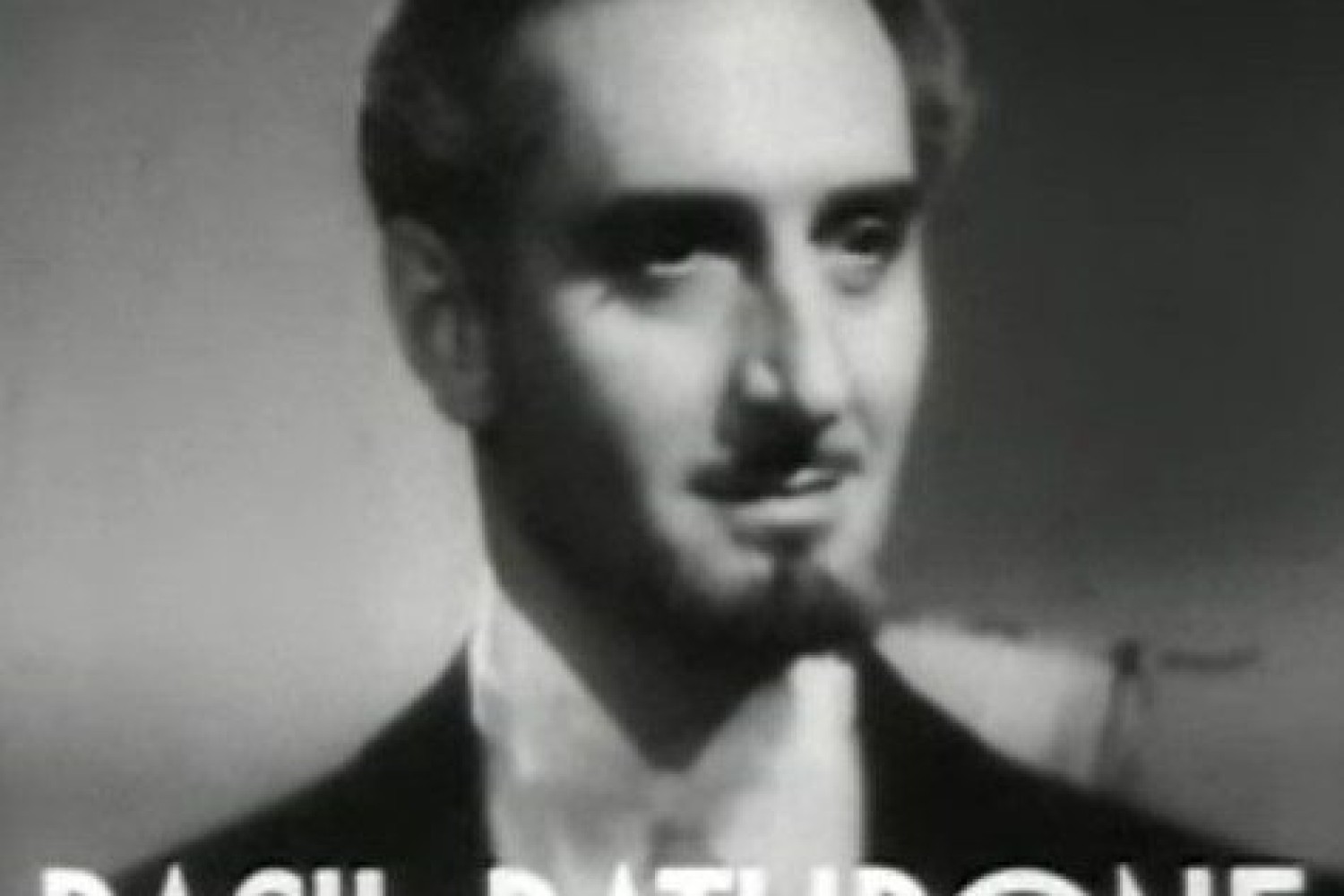
Basil Rathbone

Sir Basil Rathbone, KBE, MC, Kt was a South African-born British actor. He rose to prominence in England as a Shakespearean stage actor and went on to appear in over 70 films, primarily costume dramas, swashbucklers, and, occasionally, horror films. He frequently portrayed suave villains or morally ambiguous characters, such as Murdstone in David Copperfield and Sir Guy of Gisbourne in The Adventures of Robin Hood. His most famous role, however, was heroic—that of Sherlock Holmes in fourteen Hollywood films made between 1939 and 1946 and in a radio series. His later career included Broadway and television work; he was awarded a Best Actor Tony Award in 1948.

He was born Philip St. John Basil Rathbone in Johannesburg, South African Republic, to English parents Edgar Philip Rathbone, a mining engineer and scion of the Liverpool Rathbone family, and Anna Barbara née George, a violinist. He had two younger siblings, Beatrice and John. The Rathbones fled to England when Basil was three years old after his father was accused by the Boers of being a British spy near the onset of the Second Boer War at the end of the 1890s.

Rathbone was educated at Repton School and was engaged with the Liverpool and Globe Insurance Companies. In 1916, he enlisted for the remaining duration of World War I, joining the London Scottish Regiment as a private, serving alongside his future successful acting contemporaries Claude Rains, Herbert Marshall, and Ronald Colman. He later transferred with a commission as a lieutenant to the Liverpool Scottish, 2nd Battalion, where he served as an intelligence officer and eventually attained the rank of captain. During the war, Rathbone displayed a penchant for disguise, when on one occasion, in order to have better visibility, Rathbone convinced his superiors to allow him to scout enemy positions during daylight hours instead of during the night, as was the usual practice in order to minimize the chance of detection by the enemy. Rathbone completed the mission successfully through his skillful use of camouflage, which allowed him to escape detection by the enemy. In September 1918, he was awarded the Military Cross. His younger brother, John, was killed in action during the war while also serving Britain.

On 22 April 1911, Rathbone made his first appearance on stage at the Theatre Royal, Ipswich, as Hortensio in The Taming of the Shrew, with Sir Frank Benson’s No. 2 Company, under the direction of Henry Herbert. In October 1912, he went to America with Benson’s company, playing such parts as Paris in Romeo and Juliet, Fenton in The Merry Wives of Windsor, and Silvius in As You Like It. Returning to England, he made his first appearance in London at the Savoy Theatre on 9 July 1914, as Finch in The Sin of David. That December, he appeared at the Shaftesbury Theatre as the Dauphin in Henry V. During 1915, he toured with Benson and appeared with him at London’s Court Theatre in December as Lysander in A Midsummer Night’s Dream.

Bea Benaderet

Bea Benaderet was an American actress, born in New York City and raised in San Francisco, California. She is best remembered for starring in the 1960s television series Petticoat Junction as Shady Rest Hotel owner Kate Bradley and The Beverly Hillbillies as Jed Clampett’s cousin Pearl Bodine, and as the original voice of Granny of Warner Brothers’ Looney Tunes media franchise and Betty Rubble on The Flintstones. Benaderet reached stardom in her late 50s after over 20 years of active work as a supporting player on radio and early television, as well as a career doing voice work for 1940s and 1950s Warner Bros. cartoons.

Benaderet began voicing the character of Granny?the sometimes dimwitted, sometimes assertive owner of Tweety Bird?in the Warner Bros. cartoon series beginning in 1943, and was one of the few female voice artists associated with the studio in the early days. Benaderet continued to play the voice of Granny into the 1950s, before June Foray took over the role in 1955.

Benaderet first received notice for her radio work in the 1940s playing Millicent Carstairs on Fibber McGee & Molly, telephone operator Gertrude Gearshift and many other roles on The Jack Benny Program, school principal Eve Goodwin on the Great Gildersleeve and appeared on several Amos ‘n Andy radio shows, usually as a store clerk trying to assist Andy and Kingfish in a purchase. Benaderet also played Blanche Morton, next door neighbor to George Burns and Gracie Allen, on both radio and television. She also had a regular role in the series “A Day in the Life of Dennis Day” as Mrs. Anderson, Day’s landlord, who was also the mother of Day’s girlfriend on the show. Benaderet also voiced the widow on the Mel Blanc show. She fends off Mel’s uncle Rupert’s money-mad proposals with the phrase, “now Rupert I am in no mood for your nincompoopity.”

She played Lucille Ball’s best friend, Iris Atterbury, on the 1940s radio series My Favorite Husband. When Ball and husband Desi Arnaz decided to create a very similar television series called I Love Lucy, Benaderet was first choice to fill the role of Ethel Mertz but was unavailable to take the role since she had already signed for Burns and Allen’s television adaptation of their radio program. Vivian Vance, an almost unknown character actress and singer, was eventually cast in the part. Benaderet did get to guest on I Love Lucy on January 21, 1952 in a very amusing appearance as Miss Lewis, a love-starved spinster neighbor.

Beatrice Lillie

Bea Lillie was a comic actress. She was born as Beatrice Gladys Lillie in Toronto, Ontario, Canada. Following her marriage in 1920 to Sir Robert Peel, she was known in private life as Lady Peel.

She began performing in Toronto and other Ontario towns as part of a family trio with her mother and older sister, Muriel. Eventually, her mother took the two girls to London, England where she made her West End debut in 1914.

She was noted primarily for her stage work in revues, especially those staged by André Charlot, and light comedies, and was frequently paired with Gertrude Lawrence, Bert Lahr and Jack Haley. Beatrice Lillie, as she would be known professionally, took advantage of her gift for witty satire that made her a stage success for more than 50 years.

In her revues, she utilized sketches, songs, and parody that won her lavish praise from the New York Times after her 1924 New York debut. In some of her best known bits, she would solemnly parody the flowery performing style of earlier decades, mining such songs as “There are Fairies at the Bottom of our Garden” and “Mother Told Me So” for every double entendre, while other numbers showcased her exquisite sense of the absurd. Her performing in such comedy routines as “One Double Dozen Double Damask Dinner Napkins”, earned her the frequently used sobriquet of “Funniest Woman in the World”. Lillie never performed the “Dinner Napkins” routine in Britain, because British audiences had already seen it performed by the Australian-born English revue performer Cicely Courtneidge, for whom it was written.

110922-N-KQ655-020
WASHINGTON (Sept. 22, 2011) C-SPAN founder Brian Lamb, left, retired Major League Baseball player Jerry Coleman and actor Beau Bridges are recipients of the 2011 Lone Sailor Award. Bridges also accepted for his brother, Jeff Bridges, and their father, Lloyd Bridges.The recipients were recognized for their achievements following their military service during a dinner at the National Building Museum in Washington D.C. (U.S. Navy photo by Mass Communication Specialist 3rd Class Mikelle'D. Smith/Released)
110922-N-KQ655-020 WASHINGTON (Sept. 22, 2011) C-SPAN founder Brian Lamb, left, retired Major League Baseball player Jerry Coleman and actor Beau Bridges are recipients of the 2011 Lone Sailor Award. Bridges also accepted for his brother, Jeff Bridges, and their father, Lloyd Bridges.The recipients were recognized for their achievements following their military service during a dinner at the National Building Museum in Washington D.C. (U.S. Navy photo by Mass Communication Specialist 3rd Class Mikelle'D. Smith/Released)

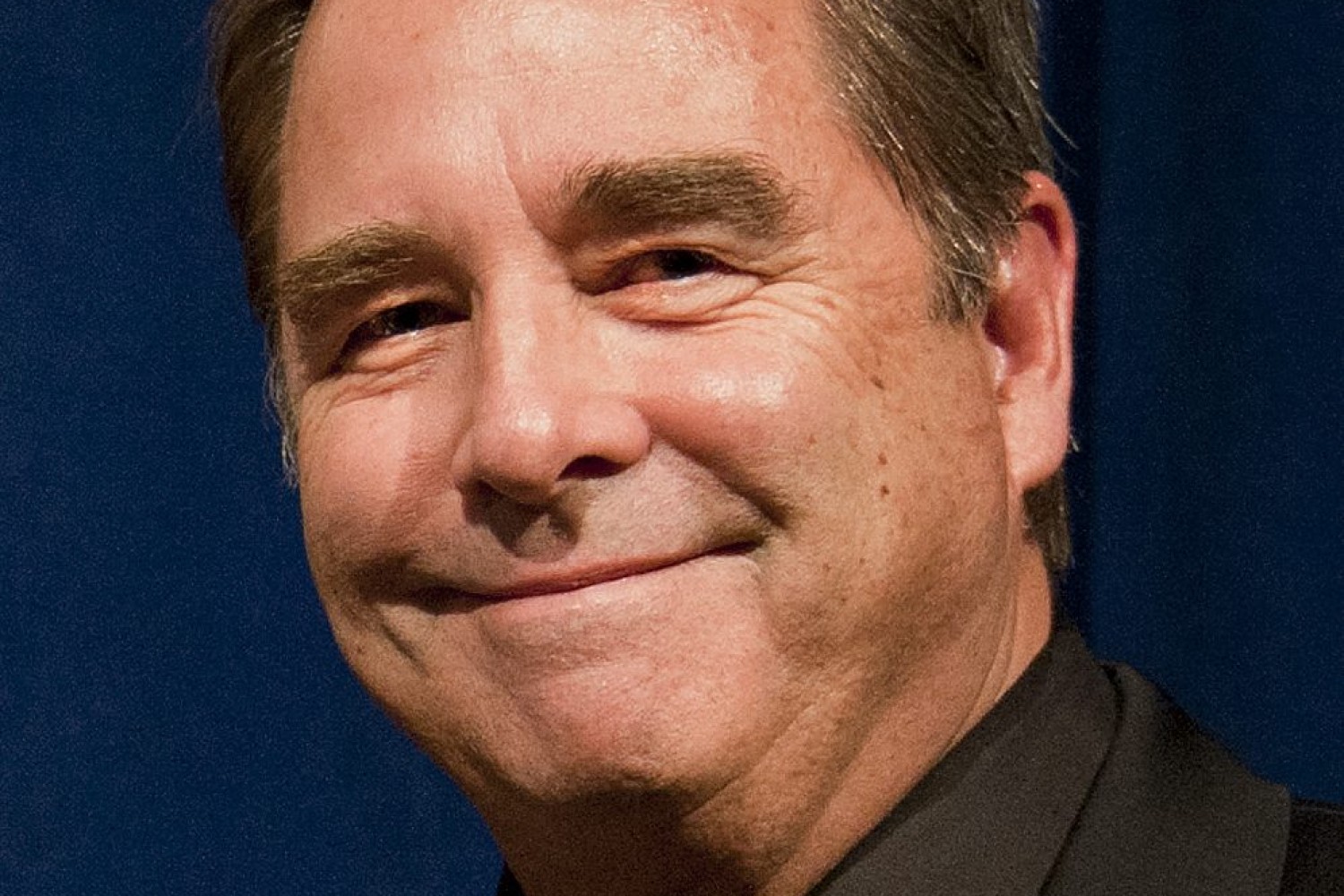
Beau Bridges

Lloyd VernetBeauBridges III is an American actor.

Bridges was born in Los Angeles, California, the son of actor Lloyd Bridges and his college sweetheart, Dorothy Bridges. He was nicknamed “Beau” by his mother and father after Ashley Wilkes’s son in Gone with the Wind, the book they were reading at the time. He has one younger brother, Jeff–who is an Oscar-winning film actor, and one younger sister, Lucinda. His brother Garrett died in childhood of sudden infant death syndrome on August 3, 1948. He has shared a close relationship with Jeff, to whom he acted as a surrogate father during his earlier life when their father was busy with work. He and his siblings were raised in the Holmby Hills section of Los Angeles. In 1989, he starred opposite his brother in perhaps his best known role, as one of The Fabulous Baker Boys.

In 1949, Bridges played a secondary juvenile role in the movie The Red Pony. Wanting to be a basketball star, however, he played his freshman year at the University of California, Los Angeles, and later transferred to the University of Hawaii. He enlisted in the US Coast Guard in 1959 and also served for eight years in the Coast Guard Reserve.

In the 1962?1963 television season, Bridges, along with his brother, Jeff, appeared on their father’s CBS anthology series, The Lloyd Bridges Show.

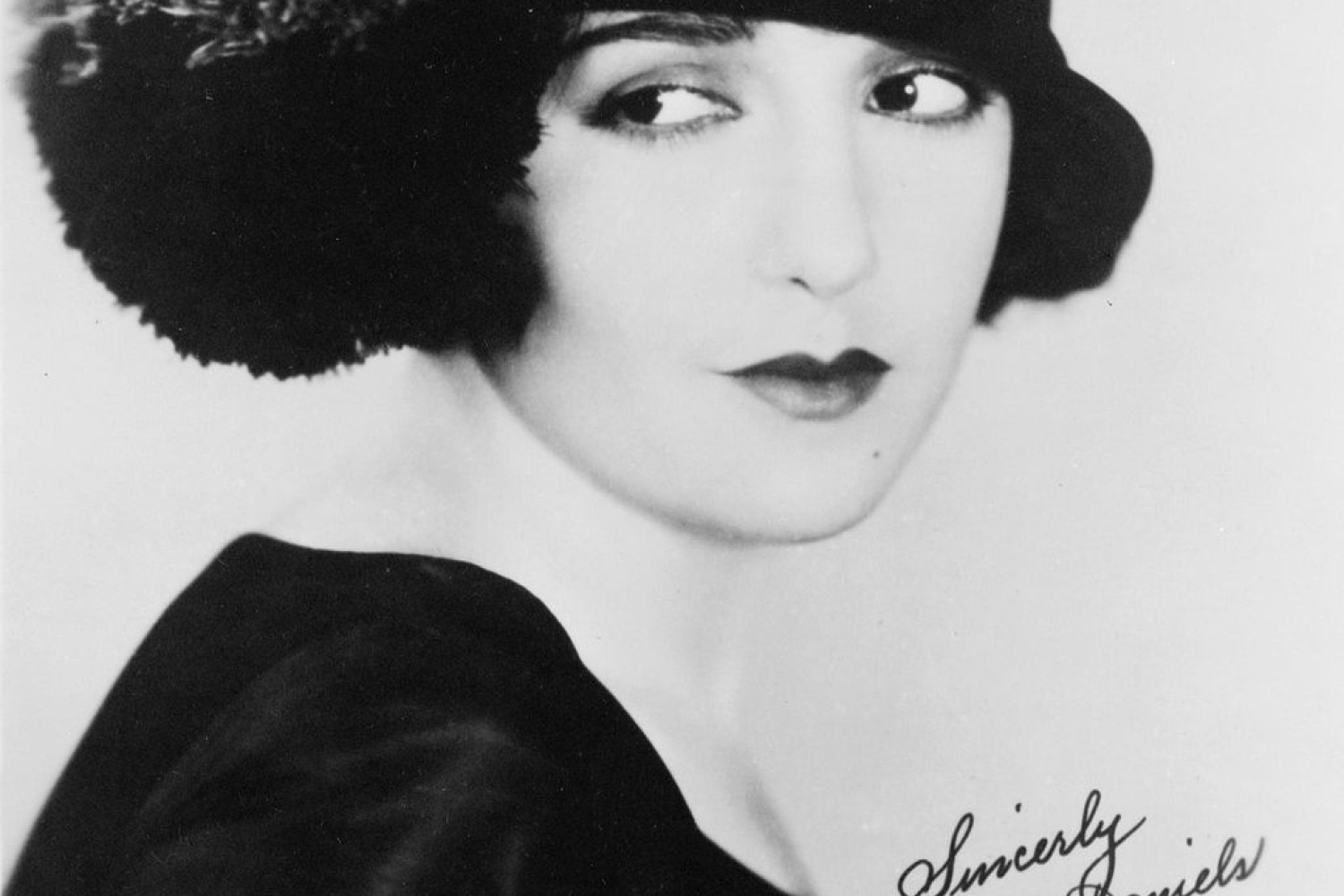
Bebe Daniels

Bebe Daniels was an American actress, singer, dancer, writer and producer. She began in Hollywood during the silent movie era as a child actress, and later gained fame on radio and television in England. Throughout her life, Bebe Daniels made over 230 films.

Daniels was born Phyllis Virginia Daniels in Dallas, Texas. Her father was a theater manager and her mother a stage actress. The family moved to Los Angeles, California in her childhood and she began her acting career at the age of four in the first version of The Squaw Man. That same year she also went on tour in a stage production of Shakespeare’s Richard III. The following year she participated in productions by Morosooa and David Belasco.

By the age of seven Daniels had her first starring role in film as the young heroine in A Common Enemy. At the age of nine she starred as Dorothy Gale in the 1910 short film The Wonderful Wizard of Oz. At the age of fourteen she starred opposite film comedian Harold Lloyd in a series of Lonesome Luke two-reel comedies starting with the 1915 film Giving Them Fits. The two eventually developed a publicized romantic relationship and were known in Hollywood as “The Boy” and “The Girl.”

In 1919, she decided to move to greater dramatic roles and accepted a contract offering from Cecil B. Demille, who gave her secondary roles in such films as Male and Female, Why Change Your Wife?, and The Affairs of Anatol .