Bette Davis

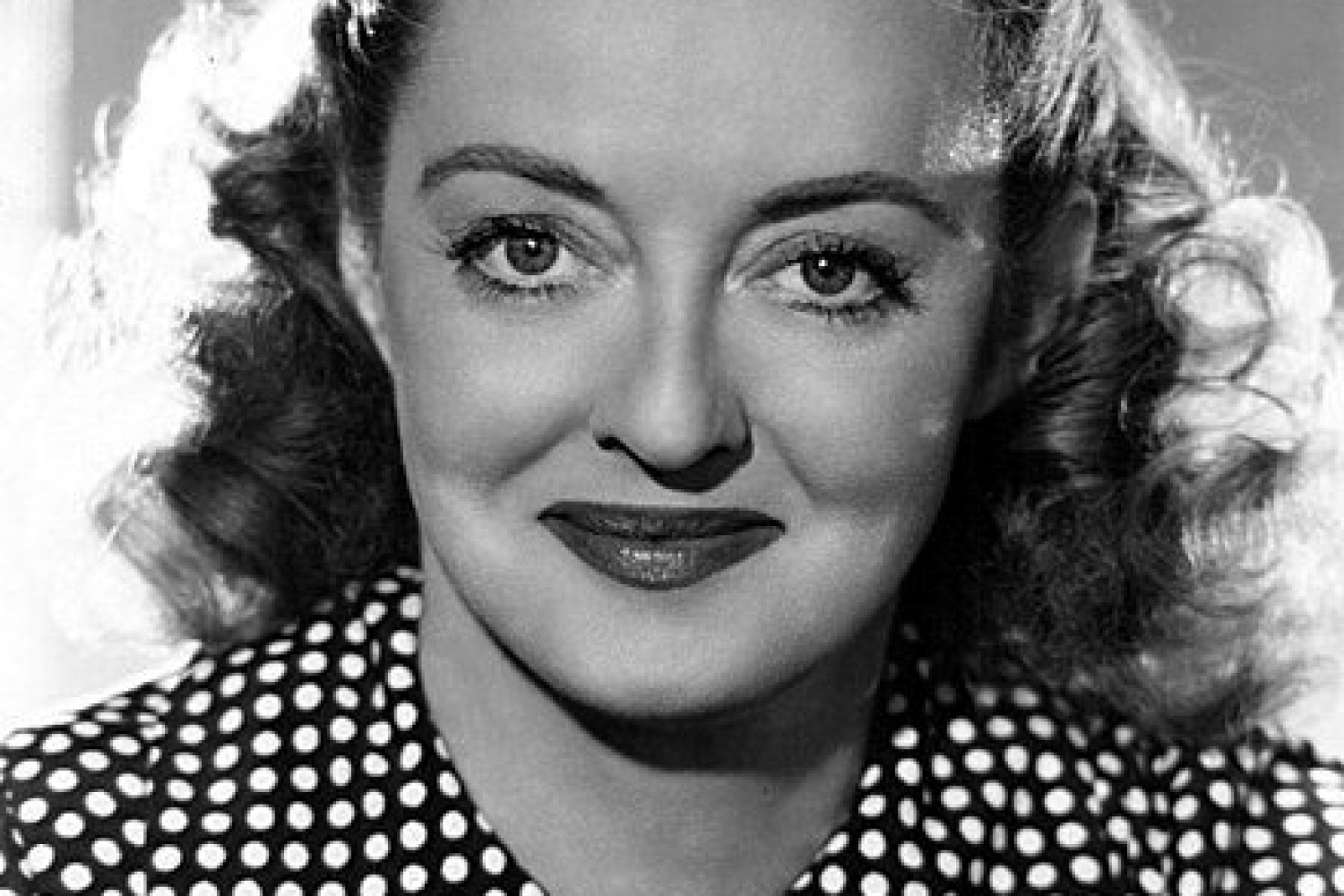
Ruth Elizabeth “Bette” Davis was an American actress of film, television and theatre. Noted for her willingness to play unsympathetic characters, she was highly regarded for her performances in a range of film genres; from contemporary crime melodramas to historical and period films and occasional comedies, though her greatest successes were her roles in romantic dramas.

After appearing in Broadway plays, Davis moved to Hollywood in 1930, but her early films for Universal Studios were unsuccessful. She joined Warner Bros. in 1932 and established her career with several critically acclaimed performances. In 1937, she attempted to free herself from her contract and although she lost a well-publicized legal case, it marked the beginning of the most successful period of her career. Until the late 1940s, she was one of American cinema’s most celebrated leading ladies, known for her forceful and intense style. Davis gained a reputation as a perfectionist who could be highly combative, and her confrontations with studio executives, film directors and costars were often reported. Her forthright manner, clipped vocal style and ubiquitous cigarette contributed to a public persona which has often been imitated and satirized.

Davis was the co-founder of the Hollywood Canteen, and was the first female president of the Academy of Motion Picture Arts and Sciences. She won the Academy Award for Best Actress twice, was the first person to accrue 10 Academy Award nominations for acting, and was the first woman to receive a Lifetime Achievement Award from the American Film Institute. Her career went through several periods of eclipse, and she admitted that her success had often been at the expense of her personal relationships. Married four times, she was once widowed and thrice divorced, and raised her children as a single parent. Her final years were marred by a long period of ill health, but she continued acting until shortly before her death from breast cancer, with more than 100 films, television and theater roles to her credit. In 1999, Davis was placed second, after Katharine Hepburn, on the American Film Institute’s list of the greatest female stars of all time.

Ruth Elizabeth Davis, known from early childhood as “Betty”, was born in Lowell, Massachusetts, the daughter of Ruth Augusta and Harlow Morrell Davis, a patent attorney; her sister Barbara was born October 25, 1909. The family was Protestant, of English, French, and Welsh ancestry. In 1915, Davis’s parents separated and Betty and Bobby attended a Spartan boarding school called Crestalban in Lanesborough, which is located in the Berkshires. In 1921, Ruth Davis moved to New York City with her daughters, where she worked as a portrait photographer. Betty was inspired to become an actress after seeing Rudolph Valentino in The Four Horsemen of the Apocalypse and Mary Pickford in Little Lord Fauntleroy, and changed the spelling of her name to “Bette” after Honoré de Balzac’s La Cousine Bette. She received encouragement from her mother, who had aspired to become an actress.
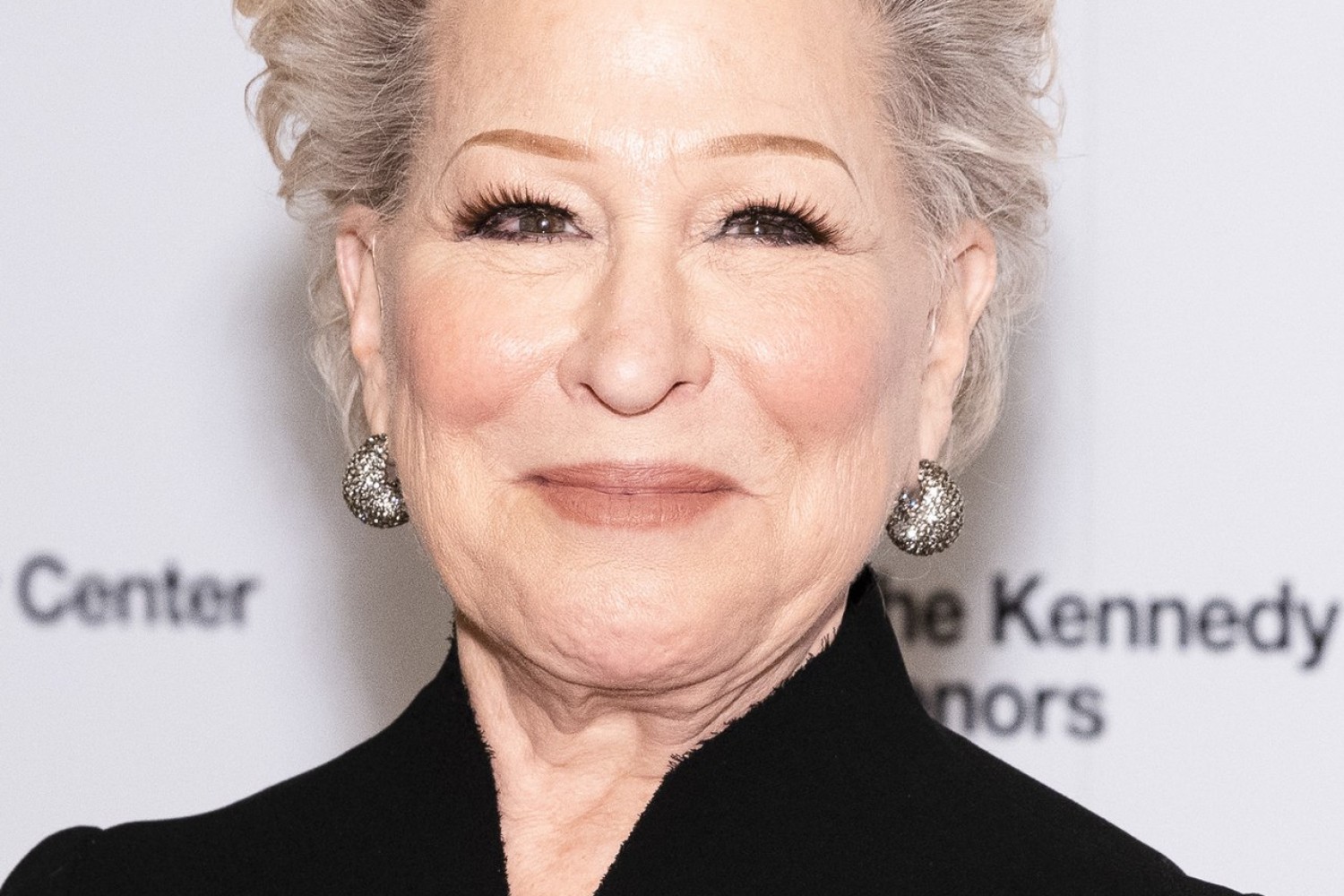
Honoree Bette Midler at the 2021 Kennedy Center Honors Medallion Ceremony at the Library of Congress, December 4, 2021. Photo by Shawn Miller/Library of Congress. ..Note: Privacy and publicity rights for individuals depicted may apply.

Bette Midler

Bette Midler is an American singer, actress and comedian, also known as The Divine Miss M. She has starred in live-action films such as Ruthless People and Hocus Pocus, as well as featuring in animated films such as Oliver & Company and Fantasia 2000.

During her more than forty-year career, Midler has been nominated for two Academy Awards; and won three Grammy Awards, four Golden Globes, three Emmy Awards, and a special Tony Award.

Midler was born in Honolulu, Hawaii. She is the daughter of seamstress/housewife Ruth and house painter Fred Midler, who worked at a Navy base in Hawaii. Her parents were from Paterson, New Jersey and moved to Honolulu before Midler was born. She was named after the actress Bette Davis, though Davis pronounced her first name in two syllables, and Midler uses one,. Midler’s family was one of the few Jewish families in a mostly Asian neighborhood. She was raised in Aiea and attended Radford High School in Honolulu. She was voted “Most Talkative” in the 1961 school Hoss Election and in her Senior Year “Most Dramatic”. She majored in drama at the University of Hawaii and earned money in the film Hawaii as an extra, playing a seasick passenger named Mrs David Buff in the film.

Midler married Martin Von Haselberg on December 16, 1984, roughly 6 weeks after meeting him for the first time. Their daughter Sophie was born on November 14, 1986.

Betty Blythe

Betty Blythe was an American actress best known for her dramatic roles in exotic silent films such as The Queen of Sheba. Blythe began her stage work in such theatrical pieces as So Long Letty and The Peacock Princess. After touring Europe and the States, she entered films in 1918 at the Vitagraph Studios in Brooklyn, then she was brought to Hollywood’s Fox studio as a replacement for actress Theda Bara. As famous for her revealing costumes as for her dramatic skills, she became a star in such exotic films as The Queen of Sheba, Chu Chin Chow and She. She was also seen to good advantage in less revealing films like Nomads of the North with Lon Chaney and In Hollywood With Potash and Perlmutter both from First National.

Betty Blythe died in Woodland Hills, California in 1972 at the age of 78. She is buried at Forest Lawn Memorial Park in Glendale, California. For her contribution to the motion picture industry, Betty Blythe has a star on the Hollywood Walk of Fame located at 1706 Vine Street.

Betty Compson

Betty Compton was a stage actress who married New York City mayor Jimmy Walker in 1933. She was born as Violet Halling Compton in Sandown, Isle of Wight.

A member of Ziegfeld Follies, she appeared in the original stage production of Funny Face alongside Fred Astaire and Adele Astaire, as well as Oh, Kay! in 1926.

Ben Johnson

Ben “Son” Johnson, Jr. was an American motion picture actor who was mainly cast in Westerns. He was also a rodeo cowboy, stuntman, and rancher.

Johnson was born in Foraker, Oklahoma, on the Osage Indian Reservation, of Cherokee and Irish ancestry, to Ben Sr. and Ollie Susan Johnson. His father was a rancher in Osage County and also a rodeo champion. As a young man, Johnson was a ranch hand, would travel with his father on the rodeo circuit, and become a star before becoming involved in the movies. He was the Professional Rodeo Cowboys Association’s Team Roping World Champion in 1953. After winning the title, he discovered that, after travel and expenses, he broke even for the year. Johnson was inducted into the Professional Rodeo Cowboys Association’s ProRodeo Hall of Fame in 1973.

Johnson married Carol Elaine Jones in 1941, and they were married for 53 years until her death on March 27, 1994. The couple had no children. Carol Jones was the daughter of noted Hollywood horse wrangler Clarence “Fat” Jones.

His career began with the controversial Howard Hughes film The Outlaw. Before filming began, Hughes bought some horses at the Oklahoma ranch that Johnson’s father managed, and hired Johnson to get the horses to northern Arizona, and then to take them on to Hollywood.

Ben Lyon

Ben Lyon was an American film actor and a 20th Century Fox studio executive.

Born in Atlanta, Georgia, Lyon entered films in 1918 after a successful appearance on Broadway opposite Jeanne Eagels. He attracted attention in the highly successful film Flaming Youth, and steadily developed into a leading man. He was most successfully paired with some of the leading actresses of the silent era including Pola Negri, Gloria Swanson, Colleen Moore, Barbara La Marr, Viola Dana, Anna Q. Nilsson, Mary Astor and Blanche Sweet.

His greatest success as an actor came in 1930 with the film Hell’s Angels. The film was a major success and brought Jean Harlow to prominence, but Lyon’s performance as an heroic World War I aviator was also highly regarded. For the next decade he was constantly in demand, but his popularity began to wane by the early 1940s.

By the mid 1940s he was working for 20th Century Fox. In 1946 he met a young aspiring actress named Norma Jeane Dougherty. After his first meeting with her he stated that she was “Jean Harlow all over again”. He organised a color screen test for the actress, renamed her, and finally signed her as Marilyn Monroe to her first studio contract.

Ben Turpin

Ben Turpin was a American cross-eyed comedian and actor, best remembered for his work in silent films.

Turpin was born Bernard Turpin in New Orleans, Louisiana on September 19, 1869, the son of a candy store owner.

He worked in vaudeville, burlesque, and circuses. Turpin had a distinctive appearance, with a small wiry frame, a brush mustache, and crossed eyes. Turpin’s famous eyes, he said, only crossed as a young adult after he suffered an accident. Turpin was convinced that the crossed eyes were essential to his comic career; his co-workers recalled that after he received any blow to the head he made a point of looking himself in the mirror to assure himself that they had not become uncrossed. Turpin was a devout Catholic, and his workmates would occasionally goad him by threatening to pray that Turpin’s eyes would uncross, thus depriving him of his livelihood.

Turpin famously bought a $25,000 insurance policy with Lloyd’s of London, payable if his eyes ever uncrossed. He developed a vigorous style of physical comedy, including an ability to stage comic pratfalls that impressed even his fellow workers in the rough-and-tumble world of silent comedy. One of his specialties was a backward tumble he called the “hundred an’ eight'” .

Beniamino Gigli

Beniamino Gigli, was an Italian opera singer. The most famous tenor of his generation, he was renowned internationally for the great beauty of his voice and the soundness of his vocal technique. Music critics sometimes took him to task, however, for what was perceived to be the over-emotionalism of his interpretations. Nevertheless, such was Gigli’s talent, he is considered to be one of the very finest tenors in the recorded history of music.

Gigli was born in Recanati, in the Marche, the son of a shoe-maker who loved opera. His brother Lorenzo became a famous Italian painter.

In 1914, he won first prize in an international singing competition in Parma. His operatic debut came on October 15, 1914 when he played Enzo in Amilcare Ponchielli’s La Gioconda in Rovigo, following which he was in great demand.

Gigli made many important debuts in quick succession, and always in Mefistofele: Teatro Massimo di Palermo, Teatro San Carlo di Napoli, Teatro Costanzi di Roma, La Scala, and finally the Metropolitan. Two other great Italian tenors present on the roster of Met singers during the 1920s also happened to be Gigli’s chief contemporary rivals for tenor supremacy in the Italian repertory?namely, Giovanni Martinelli and Giacomo Lauri-Volpi.

Bennett Cerf

Bennett Alfred Cerf was a publisher and co-founder of Random House. Cerf was also known for his own compilations of jokes and puns, for regular personal appearances lecturing across the United States, and for his television appearances in the panel game show What’s My Line?.

Bennett Cerf was born and brought up in New York City in a Jewish family of Alsatian and German descent. His father, Gustave Cerf, was a lithographer, and his mother, Frederika Wise, was an heiress to a tobacco-distribution fortune.

Cerf attended Townsend Harris High School, the same public school as composer Richard Rodgers, the publisher Richard Simon, and the playwright Howard Dietz, and he spent his teenage years at 790 Riverside Drive; this apartment building in Washington Heights was home to two other friends who became prominent as adults, Dietz and the Hearst newspapers financial editor Merryle Rukeyser. He received his B.A. from Columbia University in 1919 and his Litt.B. in 1920 from its School of Journalism. On graduating, he worked briefly as a reporter for the New York Herald Tribune, and for some time in a Wall Street brokerage, before becoming vice president of the Boni & Liveright publishing house.

In 1925, Cerf formed a partnership with his friend Donald Klopfer. The two bought the rights to the Modern Library from Boni and Liveright and went into business for themselves. They made the series quite successful and, in 1927, commenced to publish general trade books which they had selected “at random.” Thus began their formidable publishing business, which in time they named Random House. It used as its logo a little house drawn by Cerf’s friend Rockwell Kent.

Benny Carter

Bennett Lester Carter was an American jazz alto saxophonist, clarinetist, trumpeter, composer, arranger, and bandleader. He was a major figure in jazz from the 1930s to the 1990s, and was recognized as such by other jazz musicians who called him King. In 1958, he performed with Billie Holiday at the legendary Monterey Jazz Festival.

The National Endowment for the Arts honored Benny Carter with its highest honor in jazz, the NEA Jazz Masters Award for 1986. He was awarded the Grammy Lifetime Achievement Award in 1987, winner of the Grammy Award in 1994 for his solo “Prelude to a Kiss”, and also the same year, received a star on the Hollywood Walk of Fame. In 2000 awarded the National Endowment for the Arts, National Medal of Arts, presented by President Bill Clinton.

Born in New York in 1907, the youngest of three children and the only boy, received his first music lessons on piano from his mother. Largely self-taught, by age fifteen, Carter was already sitting in at Harlem night spots. From 1924 to 1928, Carter gained valuable professional experience as a sideman in some of New York’s top bands. As a youth, Carter lived in Harlem around the corner from Bubber Miley who was Duke Ellington’s star trumpeter, Carter was inspired by Miley and bought a trumpet, but when he found he couldn’t play like Miley he traded the trumpet in for a saxophone. For the next two years he played with such jazz greats as cornetist Rex Stewart, clarinetist-soprano saxophonist Sidney Bechet, pianists Earl Hines, Willie “The Lion” Smith, pianist Fats Waller, pianist James P. Johnson, pianist Duke Ellington and their various groups.

He first recorded in 1928 with Charlie Johnson’s Orchestra, also arranging the titles recorded, and formed his first big band the following year. He played with Fletcher Henderson in 1930 and 1931, becoming his chief arranger in this time, then briefly led the Detroit-based McKinney’s Cotton Pickers before returning to New York in 1932 to lead his own band,including such swing stars as Leon “Chu” Berry, Teddy Wilson, Sid Catlett, and Dicky Wells. They were sophisticated and very complex arrangements, and a number of them became swing standards which were performed by other bands. He also arranged for Duke Ellington during these years. Carter was most noted for his superb arrangements. Among the most significant are “Keep a Song in Your Soul”, written for Fletcher Henderson in 1930, and “Lonesome Nights” and “Symphony in Riffs” from 1933, both of which show Carter’s fluid writing for saxophones. By the early 1930s he and Johnny Hodges were considered the leading alto players of the day. Carter also quickly became a leading trumpet soloist, having rediscovered the instrument. He recorded extensively on trumpet in the 1930s. Carter’s name first appeared on records with a 1932 Crown label release of “Tell All Your Day Dreams to Me” credited to Bennie Carter and his Harlemites. Carter’s short-lived Orchestra played the Harlem Club in New York but only recorded a handful of brilliant records for Columbia, OKeh and Vocalion. The OKeh sides were issued under the name Chocolate Dandies.