Art Baker

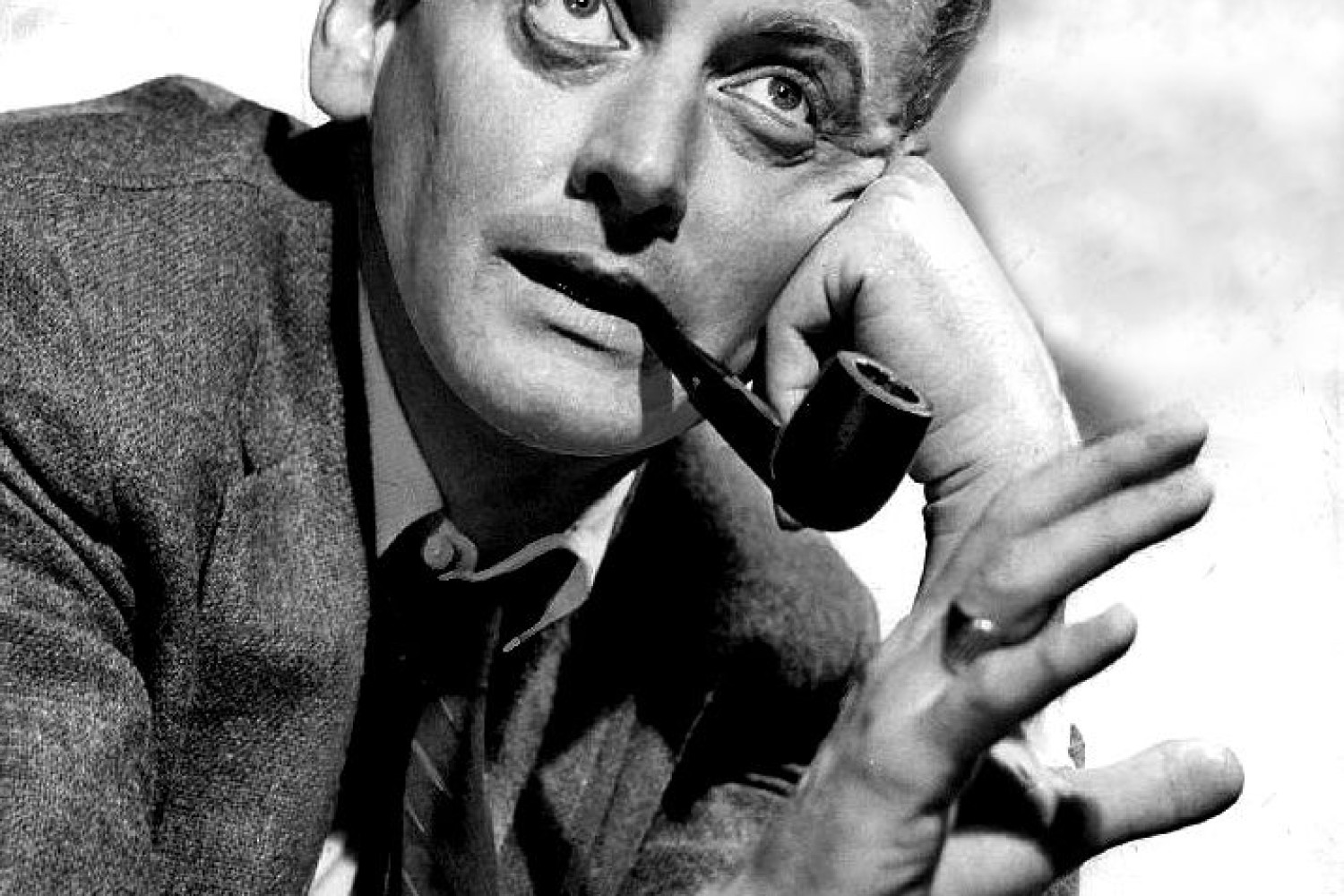
Art Baker was a film, television and radio actor of the 1930s, 1940s, 1950s and 1960s.

Born in New York City, he was most well known for his radio and television work which began in the mid-1930s. Baker, born Arthur Shank, appeared in over forty films including Alfred Hitchcock’s Spellbound, The Farmer’s Daughter, Frank Capra’s State of the Union, Any Number Can Play starring Clark Gable, and The Underworld Story. His tall, slim frame, snow white hair, smooth slightly nasal voice and a genial nature made him a natural for playing business tycoons, doctors, and senators in various movies. Baker grew up in New York and, after a number of different jobs, eventually became an actor.

He had four children, Virginia, who died of TB, Arthur, Robert and Dorothy by his first wife. They lived in Iowa.

Art Carney

Arthur William Matthew ?Art? Carney was an Academy Award winning American actor in film, stage, television and radio. Carney portrayed the upstairs neighbor and sewer worker Ed Norton, opposite Jackie Gleason’s Ralph Kramden in the situation comedy The Honeymooners.

Carney, youngest of six sons, was born in Mount Vernon, New York, the son of Helen and Edward Michael Carney, who was a newspaper man and publicist. His family was Irish American and Catholic. He attended A B Davis High School. Carney was drafted as an infantryman during World War II. During the Battle of Normandy, he was wounded in the leg by shrapnel and walked with a limp for the rest of his life.

Carney was married three times to two women: Jean Myers, from 1940 to 1965, and again from 1980 to his death, and Barbara Isaac from December 21, 1966 to 1977. He had three children with Jean Myers: Brian, Eileen & Paul. Carney died November 9, 2003 of natural causes at a rest home near his home in Westbrook, Connecticut. Carney is interred at Riverside Cemetery in Old Saybrook, Connecticut.

Art Laboe


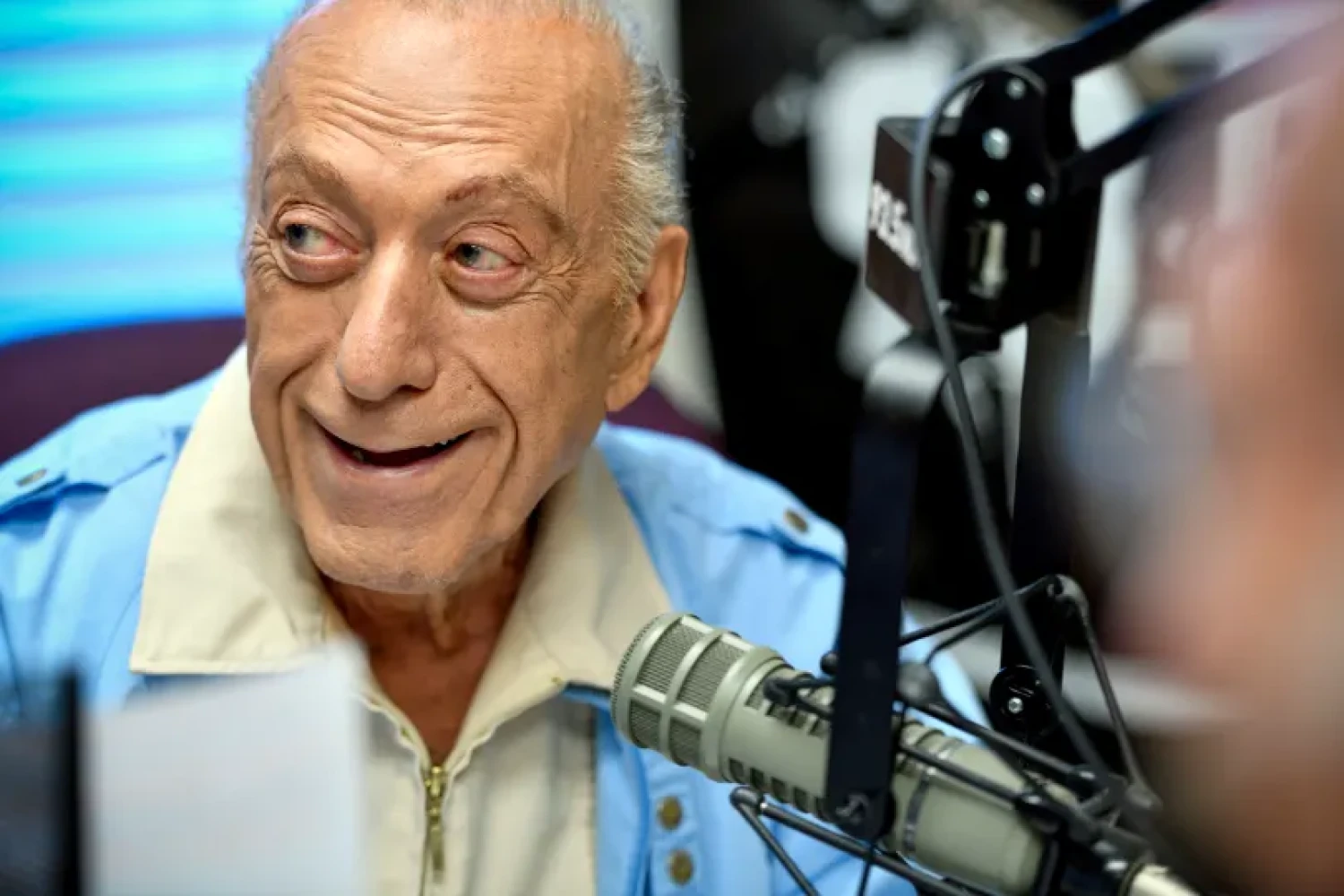
Art Laboe is an American pioneering disc jockey, songwriter, record producer, and radio station owner who is generally credited with coining the term “Oldies But Goodies.”
Through his “Original Sound Records” company, Laboe put together the first-ever record album to feature hit songs by various artists from more than one label. Titled “Oldies But Goodies™,” the album stayed on Billboard magazine’s Top 100 LPs chart for over three years and launch the popular “compilation” concept.
For decades, Laboe was at the heart of the West Coast music scene, and worked on such pioneering stations as KPOP, where he broadcast a live show from Scrivner’s Drive-In in Los Angeles, and KRLA in the 1950s, 1960s, 1970s, and again in the 1990s. The city of Los Angeles declared July 17, 1981 to be “Art Laboe Day” when he received a star on Hollywood Walk of Fame. Art Laboe memorabilia can be seen at the Rock and Roll Hall of Fame Museum’s interactive Rock and Radio exhibit in Cleveland, Ohio. In Spring of 2012, the Grammy Museum exhibit, Trouble in Paradise: Music and Los Angeles 1945-1975, included a display of Art Laboe memorabilia as he is an important figure that crossed culture boundaries through the music he plays on the radio.
Today, Art Laboe continues in music as a MC and promoter, hosting concerts  throughout Southern California, Phoenix, Las Vegas and many other markets.  And he continues as a syndicated radio personality with his show, The Art Laboe Connection, which highlights “Oldies But Goodies™” and live dedications, and can be heard Sunday-Friday nights 7pm-12am on HOT 92.3 KHHT Los Angeles CA and nationwide on iHeartRadio.com and parts of the show also air on several other stations in the Southwest including Magic 92.5 XHRM San Diego CA, Mega 104.3 KAJM Phoenix AZ, 105.7 The Oasis KOAS Las Vegas NV, Tejano 1600AM KXEW Tucson AZ, 99.1 KGGI Riverside CA, 98.5 KDES Palm Springs CA, Power 106.3 KAGM Albuquerque NM and the station Art Laboe has owned since 1999, 94.3 KOKO Fresno CA. The Art Laboe Foundation supports several Southern California high schools with annual scholarships in the fields of music and communications and because of his love for animals the Foundation also donates to many animal charities as well.  Check www.ArtLaboe.com to find out more.


Art Linkletter

Arthur Gordon “Art” Linkletter was a Canadian-born radio and television personality and the host of two long-running United States television shows: House Party, which ran on CBS radio and television for 25 years, and People Are Funny, on NBC radio-TV for 19 years. Linkletter was famous for interviewing children on House Party and Kids Say the Darndest Things, which led to a successful series of books quoting children. A native of Canada, he became a naturalized United States citizen in 1942.

Linkletter was born Gordon Arthur Kelly in Moose Jaw, Saskatchewan. In his autobiography, Confessions of a Happy Man, he revealed that he had no contact with his natural parents or his sister or two brothers since he was abandoned when only a few weeks old. He was adopted by Mary and Fulton John Linkletter, an evangelical preacher. When he was 5, his family moved to the United States to San Diego, where he graduated from high school at age 16. During the early years of the Great Depression, he rode trains around the country doing odd jobs and meeting a wide variety of people. In 1934, he earned a bachelor’s degree from San Diego State Teachers College, where he was a member of the Alpha Tau Omega fraternity. While he attended San Diego State, he played for the basketball team, and was a member of the swimming team. He had previously planned to attend Springfield College, but did not for financial reasons.

He earned a degree in teaching, but took a job as a radio announcer at KGB in San Diego. Radio paid better than teaching, and Linkletter directed radio programs for fairs and expositions in the mid-1930s. In the 1940s, Linkletter worked in Hollywood with John Guedel on their pioneering radio show, People Are Funny, which employed audience participation, contests, and gags and served as a prototype of future game shows on radio and television. People Are Funny became a television show in 1954 and ran until 1961.

Other early television shows Linkletter worked on included Life With Linkletter with his son Jack and Hollywood Talent Scouts. He also acted in two movies, People Are Funny and Champagne for Caesar. He also guest-hosted The Tonight Show three times .

Art Lund

Art Lund was an American baritone singer, initially with bandleaders Benny Goodman and Harry James, and was also a television and stage actor.

Arthur Lund was a graduate of Eastern Kentucky University, and received his master’s degree from the United States Naval Academy in aerological engineering.

Lund was a teacher of mathematics at a high school in Kentucky, and sang with local bands as a sideline before giving up school teaching to tour with Jimmy Ray’s orchestra. He originally billed himself as Art London.

After spells with Benny Goodman and Harry James, he went solo in 1946, and recorded his biggest seller the following year. The song was “Mam’selle”, written by Mack Gordon and Edmund Goulding. This gramophone record was #1 in the U.S. Billboard magazine chart and earned a gold disc. Other hits for Lund were ” Slow Boat to China”, “What’ll I Do”, “You Call Everybody Darlin'” and “Peg O’ My Heart”. He also recorded “Blue Skies”, “My Blue Heaven”, and “Mona Lisa.”

Art Mooney

Art Mooney was an American popular singer. His biggest hits were “I’m Looking Over a Four Leaf Clover” and “Baby Face” in 1948 and “Nuttin’ For Christmas,” with Barry Gordon, in 1955. His fourth million selling song “Honey Babe” was used in the motion picture, “Battle Cry,” having reached the Top 10 in the United States.

He also made a very popular 1948 recording of “Bluebird of Happiness”, but it could not compete with Jan Peerce’s best-selling 1945 version.

Mooney’s name, as well as his star on the Hollywood Walk of Fame, was prominently featured in the motion picture The Adventures of Ford Fairlane.

Arthur Cohn

Arthur Cohn is a film producer. He has received three Oscars for Best Documentary and was awarded the Guardian of Zion Award in 2004.

Arthur Cohn is an independent film producer and has won six Academy Awards, which is more than any other independent film producer in film history.

Arthur Cohn has also won the Humanitarian Award by the National Board of Review in 2001, the Ordre des Arts et des Lettres by the French Minister of Culture in 1995,  the Guardian of Zion Award in 2004, and the UNESCO Award in 2005.

Arthur Fiedler

Arthur Fiedler was a long-time conductor of the Boston Pops Orchestra, a symphony orchestra that specializes in popular and light classical music. With a combination of musicianship and showmanship, he made the Boston Pops one of the best-known orchestras in the country. Some people criticized him for over-popularizing music, particularly when adapting popular songs or edited portions of the classical repertoire, but Fiedler kept performances informal and sometimes self-mocking to attract more customers.

Fiedler was born in Boston, Massachusetts. His father was an Austrian-born violinist who played in the Boston Symphony Orchestra, and his mother was a pianist and musician. He grew up in Boston, and attended Boston Latin School until his father retired and they returned to Austria. During 1909, his father took him to Berlin to study violin with Willy Hess. Fiedler returned to Boston at the beginning of World War I. During 1915 he joined the Boston Symphony Orchestra under Karl Muck as a violinist. He also worked as a pianist, organist, and percussionist.

During 1924, Fiedler formed the Boston Sinfonietta, a chamber music orchestra composed of Boston Symphony members, and started a series of free outdoor concerts.

Fiedler was appointed the eighteenth conductor of the Boston Pops Orchestra during 1930. While the position of conductor of the Boston Pops both prior to and after Fiedler tended to be a phase of a conductor’s career, Fiedler made it his life’s work, having the position for a half-century.

Arthur Godfrey

Arthur Morton Godfrey was an American radio and television broadcaster and entertainer who was sometimes introduced by his nickname, The Old Redhead. No television personality of the 1950s enjoyed more clout or fame than Godfrey until an on-camera incident undermined his folksy image and triggered a gradual decline; the then-ubiquitous Godfrey helmed two CBS-TV weekly series and a daily 90-minute television mid-morning show through most of the decade but by the early 1960s found himself reduced to hosting an occasional TV special.

Arguably the most prominent of the medium's early master commercial pitchmen, he was strongly identified with many of his many sponsors, especially Chesterfield cigarettes and Lipton Tea. After many years for Chesterfield, he severed the relationship during one of his television programs, when his doctors convinced him that his cancer was due to smoking. Subsequently, he became a prominent spokesman for anti-smoking education.

Godfrey was born in New York City in 1903. His mother, Kathryn Morton Godfrey, was from a well-to-do Oswego, New York, family which disapproved of her marriage to an older Englishman, Arthur Hanbury Godfrey. The senior Godfrey was a sportswriter and considered an expert on surrey and hackney horses, but the advent of the automobile devastated the family's finances. By 1915, when Arthur was 12, the family had moved to Hasbrouck Heights, New Jersey. Arthur, the eldest of five children, tried to help them survive by working before and after school, but at age 14 left home to ease the financial burden on the family. By 15 he was a civilian typist at Camp Merritt, New Jersey and enlisted in the Navy two years later.

Godfrey's father was something of a "free thinker" by the standards of the era. He didn't disdain organized religion but insisted his children explore all faiths before deciding for themselves which to embrace. Their childhood friends included Catholic, Jewish and every kind of Protestant playmates. The senior Godfrey was friends with the Vanderbilts, but was as likely to spend his time talking with the shoeshine man or the hotdog vendor about issues of the day. In the book, Genius in the Family, written about their mother by Godfrey's youngest sister, Dorothy Gene, with the help of their sister, Kathy, it was reported that the angriest they ever saw their father was when a man on the ferry declared the Ku Klux Klan a civic organization vital to the good of the community. They rode the ferry back and forth three times, with their father arguing with the man that the Klan was a bunch of "Blasted, bigoted fools, led 'round by the nose!"

Arnold Schwarzenegger

Arnold Alois Schwarzenegger is an Austrian-American bodybuilder, actor, model, businessman, and politician, who is currently serving as the 38th Governor of California.

Schwarzenegger began weight-training at 15. He was awarded the title of Mr. Universe at age 20 and went on to win the Mr. Olympia contest a total of seven times. Schwarzenegger has remained a prominent face in the sport of bodybuilding long after his retirement, and has written several books and numerous articles on the sport.

Schwarzenegger gained worldwide fame as a Hollywood action film icon, noted for his lead role in such films as Conan the Barbarian and The Terminator. He was nicknamed the “Austrian Oak” and the “Styrian Oak” in his bodybuilding days, “Arnie” during his acting career, and more recently the “Governator”. As a Republican, he was first elected on October 7, 2003, in a special recall election to replace then-Governor Gray Davis. Schwarzenegger was sworn in on November 17, 2003, to serve the remainder of Davis’s term. Schwarzenegger was then re-elected on November 7, 2006, in California’s 2006 gubernatorial election, to serve a full term as governor, defeating Democrat Phil Angelides, who was California State Treasurer at the time. Schwarzenegger was sworn in for his second term on January 5, 2007.