
Jimmie Dodd

James Wesley Dodd was best known as the MC of the popular 1950s Disney TV show, The Mickey Mouse Club, as well as the writer of its well-known theme song, The Mickey Mouse Club March. A slowed-down version of this march, with different lyrics, became the “Alma Mater” that closed the show.

He had some early film roles in The Three Mesquiteers series of westerns. Coincidentally, he performed in two unrelated series whose names were plays on “musketeers”.

Dodd made his first screen appearance in the 1940 William Holden film Those Were the Days! in a minor role. He also played the taxi driver in the MGM film Easter Parade, starring Fred Astaire and Judy Garland. Dodd had a small role in an early episode of Adventures of Superman, titled Double Trouble. He also appeared in many theatrical films in the 1940s and 1950s, often uncredited. One of those films was The Jackie Robinson Story, in which Jackie Robinson played himself. He also appeared with John Wayne in “Flying Tigers”

Dodd was the heart and soul of the Mickey Mouse Club TV series, which aired each weekday. He always wore his toothy smile and Mouseke-ears, played his famous Mouse-guitar and sang self-composed songs. His simple yet timeless tunes contained positive messages for kids. In addition, among his other musical contributions is a song that a generation of kids has used for almost fifty years to spell “encyclopedia.” Dodd also wrote some themes for Zorro and wrote and performed songs in several of his movies.
Jimmy Boyd

Jimmy Boyd was an American singer, musician, and actor.

Boyd was born in an old farmhouse near McComb, Mississippi to Winnie and Leslie Boyd.

In 1941 his father, Leslie, put his wife and their two sons, on a train bound for Riverside, California, for the second time. The family was sent back to Mississippi a year earlier by the California Welfare Department because Leslie lacked the skills to get a good job. Having sold everything they owned, and only having enough money to buy tickets for his wife and the two boys, Leslie rode the rails. He hitchhiked on freight trains to join his family in California. Hoboing from Mississippi, Louisiana and as far as West Texas, Leslie Boyd picked cotton to help support his own family of twenty-one brothers and sisters.

Leslie’s father was known locally as “Fiddler Bill”. He played fiddle at dances and family gatherings throughout the region. Most of Fiddler Bill’s children inherited his musical abilities, and all sang together and played musical instruments. Leslie Boyd played guitar and harmonica and started Jimmy playing the guitar at 9 years old. Leslie Boyd had been a farmer when a drought hit and there were no more crops, so he picked cotton. He could pick over 600 pounds of cotton a day himself, and was paid 25 cents. Although there was no cotton in California to pick, this time they were determined to stay. Leslie got a menial job cleaning up construction sites, quickly becoming an accomplished finish carpenter.

Jimmy Dorsey

James “Jimmy” Dorsey was a prominent American jazz clarinetist, saxophonist, trumpeter, composer, and big band leader. He was known as “JD”. He composed the standards “I’m Glad There is You ” and “It’s the Dreamer in Me”.

Jimmy Dorsey was born in Shenandoah, Pennsylvania, the son of a music teacher and older brother of Tommy Dorsey who also became a prominent musician. He played trumpet in his youth, appearing on stage in a Vaudeville act as early as 1913. He switched to alto saxophone in 1915, and then learned to double on clarinet. Jimmy Dorsey played on a clarinet outfitted with the Albert system of fingering, as opposed to the more common Boehm system used by most of his contemporaries including Benny Goodman and Artie Shaw.

With his brother Tommy playing trombone, he formed Dorsey?s Novelty Six, one of the first jazz bands to broadcast. In 1924 he joined the California Ramblers. He did much free lance radio and recording work throughout the 1920s. The brothers also appeared as session musicians on many jazz recordings. He joined Ted Lewis’s band in 1930, with whom he toured Europe.

After returning to the United States, he worked briefly with Rudy Vallee and several other bandleaders, in addition to the Dorsey Brothers Orchestra with Tommy. He appeared on at least seventy-five radio broadcasts, as a member of Nathaniel Shilkret’s orchestra on programs such as the 1932 program, “The Music That Satisfies,” also known as the Chesterfield Quarter Hour. Tommy broke off to form his own band in 1935 after a musical dispute with Jimmy. The Dorsey Brothers Orchestra became the Jimmy Dorsey Orchestra, and included musicians such as Bobby Byrne, Ray McKinley, and Skeets Herfurt along with vocalists Bob Eberly and Kay Weber.

Jimmy Durante

James FrancisJimmyDurante was an American singer, pianist, comedian and actor. His distinctive clipped gravelly speech, comic language butchery, jazz-influenced songs, and large nose helped make him one of America’s most familiar and popular personalities of the 1920s through the 1970s. His jokes about his nose included referring to it as a “Schnozzola”, and the word became his nickname.

Durante was born in Brooklyn, New York, the third of four children born to Italian-Americans Bartolomeo Durante and Rosa Durante. He served as an altar boy at New York City’s Saint Malachy’s Roman Catholic Church also known as the Actor’s Chapel. Durante dropped out of school in the eighth grade to become a full-time ragtime pianist. He first played with his cousin, whose name was also “Jimmy Durante.” It was a family act, but he was too professional for his cousin. He continued working the city’s piano bar circuit and earned the nickname “Ragtime Jimmy,” before he joined one of the first recognizable jazz bands in New York, the Original New Orleans Jazz Band. Durante was the only member not from New Orleans. His routine of breaking into a song to deliver a joke, with band or orchestra chord punctuation after each line, became a Durante trademark. In 1920, the group was renamed Jimmy Durante’s Jazz Band.

Durante became a vaudeville star and radio personality by the mid-1920s, with a trio called Clayton, Jackson and Durante. Lou Clayton and Eddie Jackson, Durante’s closest friends, often reunited professionally. Jackson and Durante appeared in the Cole Porter musical The New Yorkers, which opened on Broadway on December 8, 1930.

By 1934, he had a major record hit with his own novelty composition, Inka Dinka Doo. It became his theme song for the rest of his life. A year later, Durante starred on Broadway in the Billy Rose stage musical Jumbo, in which a police officer stopped him while leading a live elephant and asked him, “What are you doing with that elephant?” Durante’s reply, “What elephant?”, was a regular show-stopper. Durante also appeared on Broadway in Show Girl, Strike Me Pink, and Red, Hot and Blue .

Jimmie Fidler

The Hollywood Chamber of Commerce honored Jimmie Fidler a Star on the World Famous Hollywood Walk of Fame, in the Category of Radio, on February 8, 1960, in Los Angeles. The star has been dedicated in the category of Radio and is located at 6128 Hollywood Boulevard.

Jimmie Fidler was an American columnist, journalist and radio and television personality. He wrote a Hollywood gossip column and was sometimes billed as “Jimmy” Fidler.

Born in St. Louis, Missouri, Fidler was a former Hollywood publicist who became a syndicated columnist with his “Jimmie Fidler in Hollywood” column in 187 outlets, including the New York Post and the Los Angeles Times. In 1933-34 his 15-minute NBC radio show, Hollywood on the Air, sponsored by Tangee lipstick, was broadcast from the Hollywood Roosevelt Hotel. He was regarded in Hollywood as a genuine threat to gossip queen Louella Parsons, especially after he scooped her in November 1935 on a major story about Clark Gable, an incident so embarrassing to Parsons that she lied about it in her autobiography.

Fidler interviewed film personalities for the Hollywood segments of Fox Movietone News. Such was Fidler’s influence that a negative comment by him could affect the box office drawing power of a star. According to Time, in January 1938 he was sued for libel by Constance Bennett for $250,000 after he reported she snubbed Patsy Kelly on a Hal Roach movie set and that studio workmen bought flowers for Kelly but none for Bennett.

In 1938 Fidler made a short MGM documentary film, Personality Parade, about actors making the change from silent films to talkies. It featured clips of more than 60 performers whose careers began in silent films.

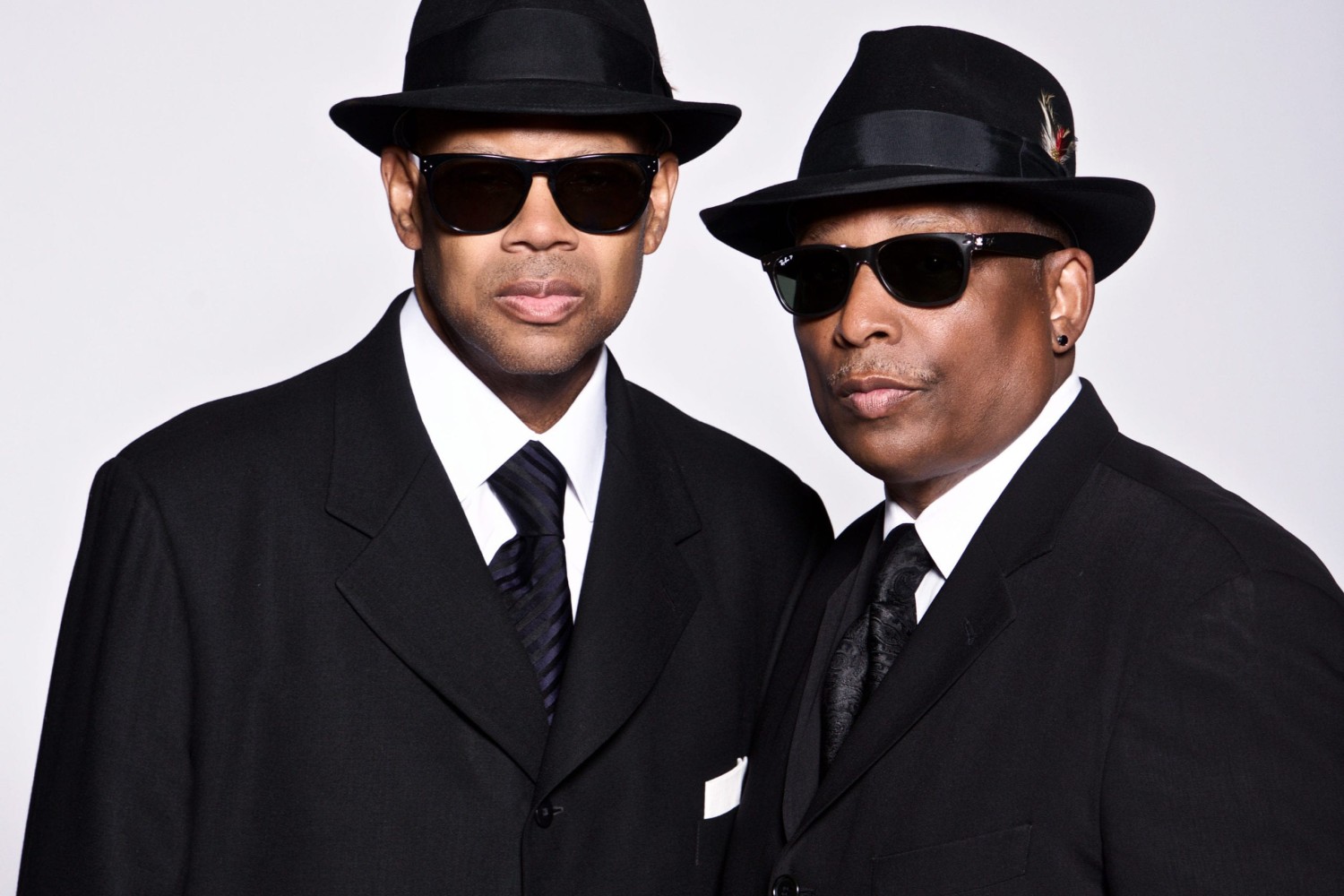
Jimmy Jam and Terry Lewis

Jimmy Jam and Terry Lewis

Jimmy Jam and Terry Lewis James Samuel “Jimmy Jam” Harris III and Terry Steven Lewis are an American R&B and pop-music songwriting and record production team. They have enjoyed great success since the 1980s with various artists, most notably Janet Jackson.

Jimmy is the son of Cornbread Harris, a Minneapolis blues and jazz musician. Jimmy met Terry in high school in Minneapolis and formed a band called Flyte Tyme, which evolved into the Time. In 1981, they were joined by Morris Day and toured with Prince as his opening act. As members of The Time, they recorded three of the group’s four albums. The first two albums are said to have shaped early 1980s R&B music. In 1982 Jimmy Jam & Terry Lewis were introduced to Music Executive Dina R. Andrews who was then a key employee of Dick Griffey’s Solar Records. The pair asked Andrews to manage them, and through her relationships Andrews first introduced Jam and Lewis to Music Executive Clarance Avant. They produced their first masters for Avant on the SOS Band. Andrews set-up Jam and Lewis’s company Flyte Tyme Productions as a business entity, and continued shopping them to her other record executives. The producers went on to produce several other masters for Avant under Dina Andrews Management on SOS Band, Cherrelle, Alexander O’Neal and Change. Additionally, Andrews shopped the duo to many of the executives and artist who used their services, such as Klymaxx, Cheryl Lynn, and executives such as John McClain, Clive Davis, Sylvia Rhone, Warner Chapell, and many others.

The pair was fired by Prince from a tour because a blizzard left them unable to rejoin after a short break to produce music for the SOS Band. However, one of the tracks they were producing, “Just be Good to Me”, became a big hit and sealed the duo?s reputation, as well that of the SOS Band. The duo would rejoin The Time for one album only, 1990?s Pandemonium. They were given song writing credit and the subsequent Grammy Award for Janet Jackson’s 1997 “Got Til It’s Gone,” although J Dilla of Slum Village and the Soulquarians was the one that produced the record.

Jim Davis

Jim Davis was an American actor, best known for his role as Jock Ewing in the CBS prime-time soap Dallas, a role which he held up until his death in April 1981.

Born as Marlin Davis in Edgerton, Missouri, his first major screen role was opposite Bette Davis in the 1948 melodrama Winter Meeting. His film career consisted of mostly B movies, many of them westerns, although he made an impression as a U.S. senator in the Warren Beatty conspiracy thriller The Parallax View. In the episode “Little Washington” of the syndicated television series Death Valley Days, Davis portrayed a Congressman from Nevada.

From 1954-55, Davis starred and narrated the syndicated western television series Stories of the Century. He portrayed Matt Clark, a detective for the Southwestern Railroad who works to bring notorious gunfighters to justice. His costars were Mary Castle and Kristine Miller. Stories of the Century was the first western series to win an Emmy Award. Among the historical figures featured were John Wesley Hardin, Sam Bass, Doc Holliday, the Dalton Brothers, the Younger Brothers, Belle Starr, L.H. Musgrove, and Clay Allison.

From 1958-1960, Davis starred as Wes Cameron with Lang Jeffries in the role of Skip Johnson in the syndicated adventure series Rescue 8.

Jim Gray

Jim Gray is an American sportscaster. He has previously worked as a reporter with NBC Sports and CBS Sports. He is currently with the Westwood One radio network, Showtime, The Golf Channel and ESPN/ESPN on ABC but has provided NBC with commentary during the 2008 Summer Olympics.

Gray has been well known for his interview technique. Gray has broken numerous sports stories and has scored a number of exclusive interviews with Mike Tyson, Kobe Bryant, Ron Artest, Dennis Rodman, Michael Jordan, Tiger Woods, Barry Bonds and others. Gray has won 11 National Emmy Awards and has twice been named the Sports Reporter of the Year by the ASA. Gray has worked on many major sporting events including numerous Super Bowls, World Series, NBA Finals, NCAA Final Fours, Olympics, The Masters and World Boxing Title Fights. Gray was named as one of the 50 Greatest Sports Broadcasters of All-Time by David Halberstam, ranking 49th.

Gray was the sideline reporter for the Pacers?Pistons brawl in 2004. He was also the reporter on the air for Showtime for the Tyson/Holyfield fight in 1997 in which Tyson bit off Holyfield's ear. Gray also reported on the Olympic bombing from the 1996 Atlanta Olympics.

Gray served as a reporter for NBC Sports coverage of Boxing at the 2008 Summer Olympics.

Jim Healy

Jim Healy was a longtime Los Angeles, California, sports commentator, whose daily solo radio show featured a number of sound effects and audio clips of famous sports personalities, which he played repeatedly to affect an acerbically humorous tone.

Excerpting from his entry on the :

A one-of-a-kind sportscaster in Los Angeles for 43 years, Jim died July 22, 1994, at age 70 from complications of liver cancer. He began at KMPC in 1950, fresh out of UCLA, writing for broadcaster Bob Kelley. Jim wrote for Bob for 11 years. He hosted “Here’s Healy” on KBIG and also worked at KFWB, KABC-TV and KLAC. Jim was the nightly sports reporter on KABC-TV/Channel 7. .”Is. it. true?” became one of his trademark lines. His headstone at Hollywood Hills Forest Lawn reads: “Jim Healy, 1923-94, IT IS TRUE.? . In 1997 he was inducted into the Southern California Sports Broadcasters Hall of Fame.

Healy’s shows took the form of him reading headlines, with the clicking sound effect of a teleprinter in the background. In response to his own headlines or comments, Healy would then play one of his many favorite audio clips, such as “That’s a bunch of bull,” “That’s just plain poppycock”, or “Jim Healy, you’ve got a weak show”. Among his sound effects was a silly laughtrack, sounding like, “Hee-hee-hee-hee.” .

Jim Henson

James MauryJimHenson was an American puppeteer. He was one of the most widely known puppeteers in history and was the creator of The Muppets. He was the leading source behind their long run in the television series Sesame Street and The Muppet Show and films such as The Muppet Movie and creator of advanced puppets for projects like Fraggle Rock, The Dark Crystal, and Labyrinth. He was also an Oscar-nominated film director, Emmy Award-winning television producer, and the founder of The Jim Henson Company, the Jim Henson Foundation, and Jim Henson’s Creature Shop. Henson died unexpectedly in 1990 at the age of 53.

Jim Henson was born in Greenville, Mississippi on September 24, 1936. He was the younger of two boys. His parents were Betty Marcella and Paul Ransom Henson, an agronomist for the U.S. Department of Agriculture. He spent his early childhood in Leland, Mississippi, then moved with his family to Hyattsville, Maryland, near Washington, DC, in the late 1940s. Henson was raised as a Christian Scientist; he later remembered the arrival of the family’s first television as “the biggest event of his adolescence,” being heavily influenced by radio ventriloquist Edgar Bergen and the early television puppets of Burr Tillstrom and Bil and Cora Baird.

In 1954, while attending Northwestern High School, he began working for WTOP-TV creating puppets for a Saturday morning children’s show named The Junior Morning Show. After graduating from high school, Henson enrolled at University of Maryland, College Park, as a studio arts major, thinking that he might become a commercial artist. A puppetry class offered in the applied arts department introduced him to the craft and textiles courses in the College of Home Economics, and he graduated with a B.S. in home economics in 1960. As a freshman, he was asked to create Sam and Friends, a five-minute puppet show for WRC-TV. The characters on Sam and Friends were already recognizable Muppets, and the show included a primitive version of what would become Henson’s most famous character, Kermit the Frog.

In the show, he began experimenting with techniques that would change the way in which puppetry was used on television, including using the frame defined by the camera shot to allow the puppeteer to work from off-camera. Henson believed that television puppets needed to have “life and sensitivity,” and so he began making characters from flexible, fabric-covered foam rubber, allowing them to express a wider array of emotions, at a time when many puppets were made out of carved wood. A marionette’s arms are manipulated by strings, but Henson used rods to move his muppets’ arms, allowing greater control of expression.