Al Pearce

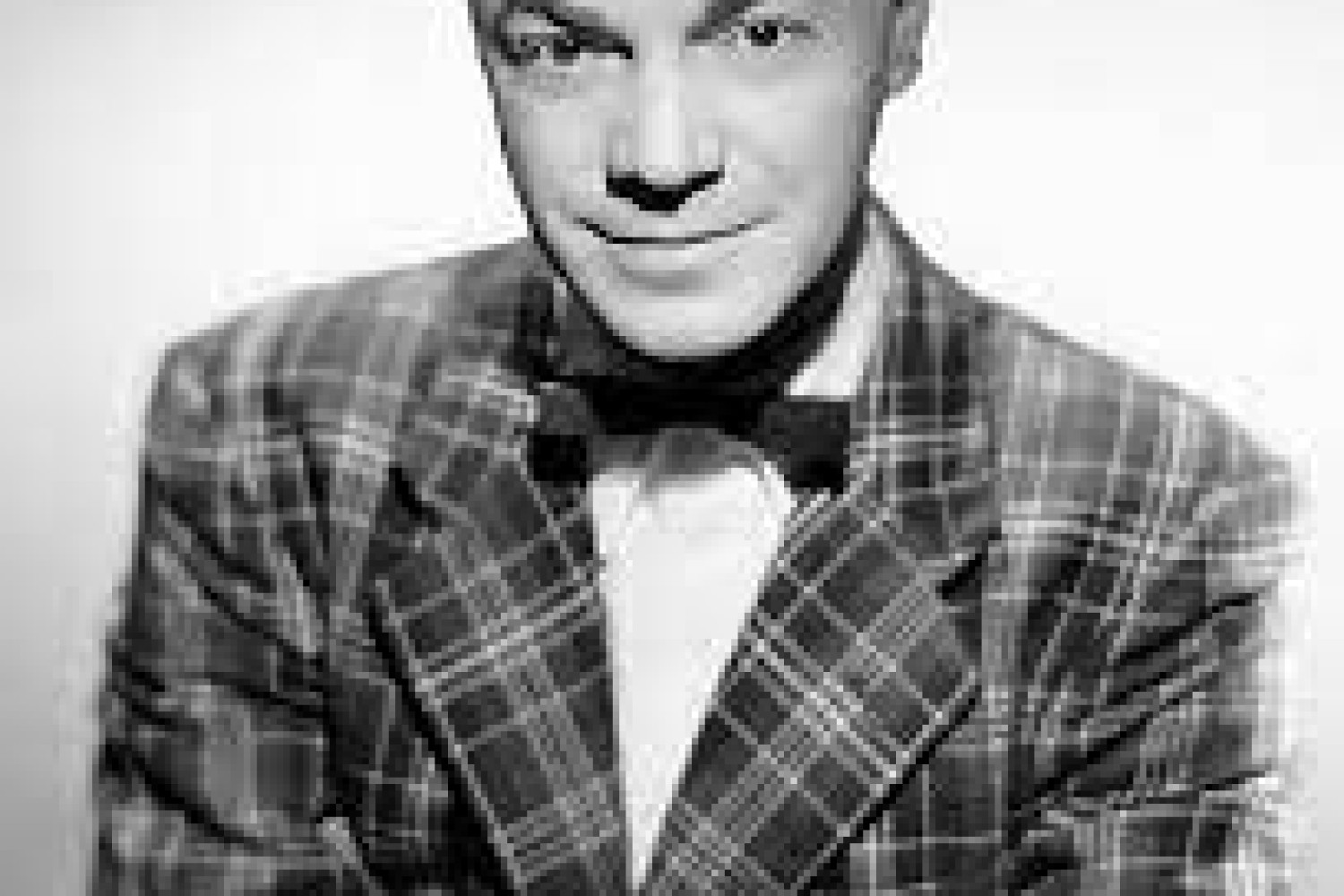
Albert Pearce was a comedian, singer and banjoist who was a popular personality on several radio networks from 1928 to 1947.

After peddling insurance door-to-door during the 1920s, Al Pearce began selling real estate. With his brother Cal, he sang on the air in 1928 as part of the San Francisco Real Estate Glee Club. Al Pearce moved from music to comedy on KFRC, San Francisco, after writer Jack Hasty gave him a comedy sketch about a nervous door-to-door salesman named Elmer Blurt. As Pearce rose to fame, Blurt’s running gag, “Nobody home, I hope, I hope, I hope,” became a national catch phrase.

When Pearce’s The Happy Go Lucky Hour began on KFRC in 1928, his gang consisted of brother Cal, Abe Bloom, Charles Carter, Jean Clarimoux, Edna Fisher, Tommy Harris, Norman Nielsen, Monroe Upton, Hazel Warner and Cecil Wright. The musical-variety show scored such a success in San Francisco from 1928 until 1932 that it moved to the Blue Network on January 13, 1934, airing Saturdays at 6pm until September when the 30-minute series split into two 15-minute shows heard Mondays and Fridays at 5pm. It continued in those timeslots until March 29, 1935.

Pearce gained a sponsor with Pepsodent Toothpaste for Friday afternoon shows on both the Blue Network and NBC from May 13, 1935, until April 3, 1936. His mid-1930s gang included comic Morey Amsterdam, “human chatterbox” Arlene Harris, vocalist Mabel Todd, singing comic Andy Andrews, and nutty cooking and health expert “Tizzie Lish”, portrayed by Bill Comstock.

Alabama

See the Hollywood Walk of Fame Star Ceremony news release

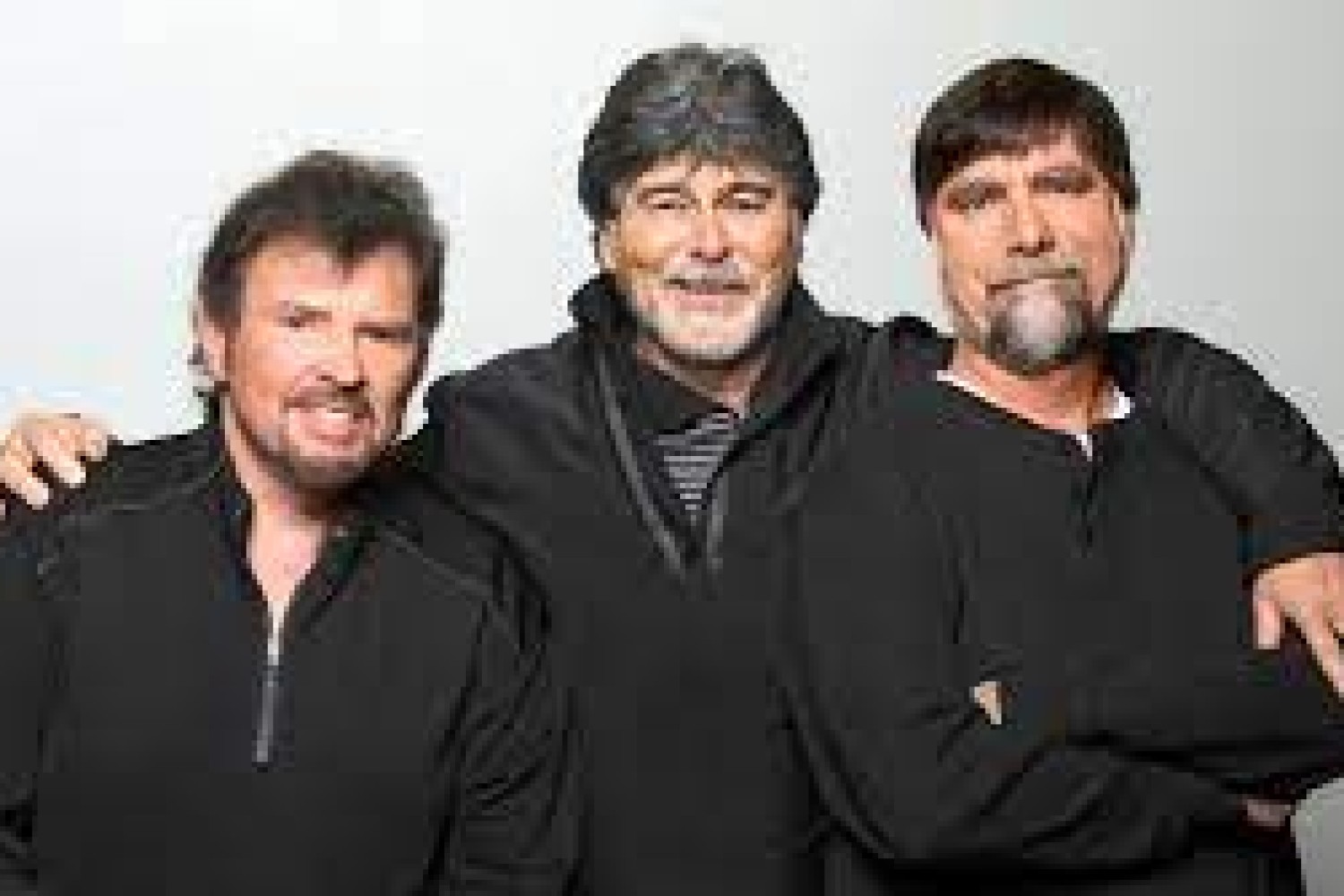
Alabama was a Grammy Award-winning country music and southern rock band from Fort Payne, Alabama, United States. The band was founded in 1969 by Randy Owen and his cousin Teddy Gentry, soon joined by Jeff Cook. In 1973, after Owen’s graduation from Jacksonville State University, they gave up their day jobs and weekend gigs. The group, formerly known as “Wildcountry”, left Fort Payne and Lookout Mountain to explore the possibilities of the club scene in surrounding coastal South Carolina.

They were the most commercially successful country act in the 1980s. The band is often credited with bringing country music groups into the mainstream, paving the way for the success of today’s top country groups. Since its founding in 1972, Alabama has included Owen, Cook and Gentry. Herndon was hired in 1979, and the band has had the same four members ever since.

The band’s blend of traditional country music and southern rock combined with elements of gospel music, and pop music gave it a crossover appeal that helped lead to their unprecedented success. They also toured extensively and incorporated production elements such as lighting and “sets” inspired by rock concerts into their shows. The band has over 30 number one country records on the Billboard Magazine charts to their credit and have sold over 73 million records to date.

The band was formed in 1969 by cousins Owen, Gentry, and Cook under the name Young Country. Their first gig was playing for a high school talent contest for which they won first prize?a trip to the Grand Ole Opry. The band took a break while Owen and Cook attended college, and then in 1972 the band reunited in Anniston, Alabama, using the name Wildcountry. In 1973 they decided to make the band a professional career, quit their day jobs and began playing in clubs across the Southeast. Most-famously, they performed at the Myrtle Beach, South Carolina nightspot. Over the next few years, the band would choose the name “Alabama” for their band, add drummer Mark Herndon, and set their sights on Nashville.

Alan Curtis

Alan Curtis was an American film actor appearing in over 50 films.

Born Harry Ueberroth in Chicago, Illinois, he began his career as a model before becoming an actor, appearing in local newspaper ads. His looks did not go unnoticed in Hollywood. He began appearing in films in the late 1930s (including a Technicolor appearance in the Alice Faye-Don Ameche film Hollywood Cavalcade and a memorable role in High Sierra. He is probably best known as one of the romantic leads in Abbott and Costello’s first hit movie Buck Privates.

His chance for leading-man stardom came when he replaced the unwilling John Garfield in the 1943 production Flesh and Fantasy. Curtis played a ruthless killer opposite Gloria Jean. Unfortunately for both actors, the studio removed their performances from the final film. The footage was later expanded into a B-picture melodrama Destiny. The film failed to establish Curtis as a major-name star, but it did typecast him in hardbitten roles, like the man framed for murder in Phantom Lady and the detective Philo Vance.

He starred in over two dozen movies and has a star on the Hollywood Walk of Fame.

Alan Freed

Albert James “Alan” Freed, also known as Moondog, was an American disc-jockey. He became internationally known for promoting African-American rhythm and blues music on the radio in the United States and Europe under the name of rock and roll. His career was destroyed by the payola scandal that hit the broadcasting industry in the early 1960s.

Freed was born to a Jewish father, Charles S. Freed, and Welsh mother, Maude Palmer, in Johnstown, Pennsylvania. In 1933, Freed’s family moved to Salem, Ohio where Freed attended Salem High School, graduating in 1940. While Freed was in high school, he formed a band called the Sultans of Swing in which he played the trombone. Freed’s initial ambition was to be a bandleader; however, an ear infection put an end to this dream. While in college, Freed became interested in radio. Freed served in the Army during World War II and worked as a DJ on Armed Forces Radio. Soon after World War II, Freed landed broadcasting jobs at smaller radio stations, including WKST ; WKBN ; and WAKR, where, in 1945, he became a local favorite for playing hot jazz and pop recordings.

Freed, a well-known disc jockey was commonly referred to as the “father of rock and roll.? He was given this title because he was the first to coin the phrase,? rock and roll? on public radio. The term rock and roll was used in songs by other famous artists; however, he is credited with popularizing the term “rock and roll” to describe the genre of music style. While the term “rock and roll” goes back as far as Trixie Smith’s 1923 recording of “My Man Rocks Me ? her song?s meaning is a ?double entendre? referring to dance and sex. Also another song by The Boswell Sisters’ a 1934 pop hit “Rock and Roll,” was referring to the motion of a ship on the sea. Alan Freed is one of several key individuals who helped bridge the gap of segregation among young teenage Americans. Alan Freed made it possible for white audiences to hear African-American music stylings. He arranged live concerts and played “black” music on his radio station. He chose to play original songs by black artists rather than cover versions by white artists. Freed was instrumental in introducing this new style of music ?rock and roll? to a teenage audience who were ready to have their own type of music unlike the musical taste of their parents. Alan Freed appeared in several motion pictures in which he played a part as himself. In the 1956 film, ?? Rock, Rock, Rock”, Freed tells the audience that “rock and roll” is a river of music that has absorbed many streams: rhythm and blues, jazz, rag time, cowboy songs, country songs, folk songs. All have contributed to the big beat.”

In the late 1940s, while working at WAKR in Akron, Ohio, Freed met Leo Mintz, the owner of the Record Rendezvous, one of Cleveland’s largest record stores, who had begun selling rhythm and blues records. Mintz told Freed that he had noticed increased interest in the records at his store, and encouraged him to play them on the radio. In 1949, Freed moved to Cleveland and, in April 1950, he joined WXEL-TV as the afternoon movie show host. The next year, he got a job playing classical music on Cleveland radio station WJW.

Alan Hale, Jr.

Alan Hale, Jr. was an American movie and television actor, best known for his role as Skipper on the popular sitcom Gilligan’s Island. Hale was the lookalike son of popular supporting film actor Alan Hale.

Hale was born in Los Angeles, California. His father was character actor Alan Hale, Sr. and his mother was Gretchen Hartman, a silent film actress. His father, had an extremely successful career in movies both as a leading man in silent films and as a supporting actor in sound movies, appearing in many Errol Flynn films, acting in 235 movies altogether, and playing Little John in Robin Hood films three times over a 28-year span, beginning with the silent Douglas Fairbanks version. While his father was adapting to sound films, Hale, Jr. began his career while still a baby.

During the Second World War, Hale, Jr. enlisted in the United States Coast Guard.

After the death of his father in 1950, Alan stopped using “Junior”.

Alan Hale, Sr.

Alan Hale, Sr. was an American movie actor and director, most widely remembered for his many supporting character roles, in particular as frequent sidekick of Errol Flynn. His wife of over thirty years was Gretchen Hartman, a child actress and silent film player and mother of their three children. He was the father of actor Alan Hale, Jr., best known as "the Skipper" on television's Gilligan's Island.

Hale was born Rufus Edward Mackahan in Washington, D.C. His first film role was in the 1911 silent movie The Cowboy and the Lady. He played "Little John" in the 1922 film Robin Hood, with Douglas Fairbanks and Wallace Beery, reprised the role sixteen years later in The Adventures of Robin Hood with Errol Flynn and Basil Rathbone, then played him yet again in Rogues of Sherwood Forest in 1950 with Bo Derek's future husband John Derek as Robin Hood, 28 years after his initial performance.

His other films include Fog Over Frisco, The Little Minister, and It Happened One Night with Clark Gable, all released in 1934; the 1937 remake of Stella Dallas; High, Wide, and Handsome; The Fighting 69th with James Cagney; They Drive By Night with George Raft, Ann Sheridan, Ida Lupino, and Humphrey Bogart; Manpower with Edward G. Robinson, Marlene Dietrich, and George Raft; and as the cantankerous Sgt. McGee in the 1943 movie This Is the Army with George Murphy and Ronald Reagan.

Hale directed eight movies during the 1920s and 1930s and acted in 235 theatrical films.

Adrienne Ames

Adrienne Ames was an American film actress. Born Adrienne Ruth McClure in Fort Worth, Texas, Ames began her film career in 1927 as a stand-in for Pola Negri. Ames was soon cast in small film roles in silent films.

With the advent of talking pictures, Ames’ popularity grew and she was usually cast as society women, or in musicals. She made thirty films during the 1930s with her biggest success in George White’s Scandals, a film which was also notable as the debut of Alice Faye. Ames also appeared with the three leading men from the 1931 version of Dracula in The Death Kiss. By the end of the decade, Ames’ popularity had diminished and she retired in the early 1940s.

Ames was married three times, including to actor Bruce Cabot from 1933 until 1937. Ames died of cancer on May 31, 1947 in New York City. She is interred in the Oakwood Cemetery in her hometown of Fort Worth, Texas.

Akim Tamiroff

Akim Mikhailovich Tamiroff, Tiflis, Russian Empire was a Russian actor. He won the first Golden Globe Award for Best Supporting Actor. He was born of Armenian ethnicity, trained at the Moscow Art Theatre drama school. He arrived in the US in 1923 on a tour with a troupe of actors and decided to stay. Tamiroff managed to develop a career in Hollywood despite his thick Russian accent.

Tamiroff’s film debut came in 1932 in an uncredited role in Okay, America!. He performed in several more uncredited roles until 1935, when he co-starred in The Lives of a Bengal Lancer. The following year, he was cast in the title role in The General Died at Dawn, for which he was nominated for the Academy Award for Best Supporting Actor. He appeared in the 1937 musical High, Wide, and Handsome and the 1938 proto-noir Dangerous to Know opposite Anna May Wong, frequently singled out as his best role.

In the following decade, he appeared in such films as The Buccaneer, The Great McGinty, The Corsican Brothers, Tortilla Flat, Five Graves to Cairo, His Butler’s Sister, For Whom the Bell Tolls, for which he received another Oscar nomination, and The Miracle of Morgan’s Creek. In later years, Tamiroff appeared in Ocean’s Eleven, Topkapi and had a long collaboration with Orson Welles including Touch of Evil, Mr Arkadin, The Trial and Welles unfinished version of Don Quixote where he played Sancho Panza.

While Tamiroff may not be a household name now, his malapropistic performance as the boss in The Great McGinty inspired the cartoon character Boris Badenov, the male half of the villainous husband-and-wife team Boris and Natasha on The Rocky and Bullwinkle Show. He was also spoofed in a 1969 episode of the TV show H.R. Pufnstuf entitled “The Stand-in” in which a frog named “Akim Toadanoff” directs a movie on Living Island.

Al Christie

Al Christie was a Canadian-born motion picture director, producer and screenwriter.

Born Alfred Ernest Christie, in London, Ontario, Canada, he was one of a number of Canadian pioneers in early Hollywood who made their way to Hollywood, California, attracted by the newly developing motion picture business. Al Christie began his career in 1909 working for David Horsley’s Nestor film company in Bayonne, New Jersey. In 1910, at Horsley’s Centaur Film Company, Christie began turning out one single reel of a Mutt and Jeff comedy picture every week. The following year, Al went to the West Coast to head up Nestor Studios for Horsley. This operation was the first ever movie studio to be built in Hollywood It opened October 27, 1911. Al Christie then formed a partnership with his brother Charles to form Christie Film Company which lasted until 1933 when the company went into receivership.

Al Goodman

Al Goodman was a conductor, songwriter, stage composer, musical director, arranger, and pianist.

Graduate of the Baltimore City College and the Peabody Conservatory in Baltimore, musician in a nickelodeon, and chorus boy in one of the Milton Aborn’s operettas, Russian-born Al Goodman was first introduced to musical comedy by the late Earl Carroll who persuaded him to collaborate in producing his musical, So Long Letty.

This success, followed by the hit, ?Sinbad?, which he produced with Al Jolson, led to positions as orchestra conductor for many Broadway productions including the highly successful Flyin? High, The Student Prince, and Blossom Time. In all, during this period of his career, Goodman directed over 150 first-night performances and became one of the Great White Way’s most popular conductors.

He was in such demand that it was not uncommon for him to conduct the orchestra of a show for the first few performances, and then hand the baton over to another while he prepared for a new production. In addition to his assignments as one of RCA Victor’s most talented conductors, Goodman was kept busy directing the music for various radio network shows including Palmolive Beauty Box Theater, Your Hit Parade and the Fred Allen Show and his pet program, The Prudential Family.